February 2021

Review: Batman: Arkham Asylum (2009) – Is It Still The Best?

Review: Batman: Arkham Asylum – The Game That Changed Everything Studio: Rocksteady Studios Genre: Action/Adventure Platforms: PS4, Xbox One, PC (Return to Arkham Collection) Release Year: 2009 It is hard to believe Batman: Arkham Asylum is over a decade old. Before Rocksteady released this unexpected classic, superhero games were a joke. The market was plagued with awful titles like Superman 64. No one expected Arkham Asylum to succeed. Yet, it spawned an award-winning franchise. Rocksteady is now famous as “the Batman guys.” But how does it stand up in 2026? If you have never played it, is it worth becoming an inmate in this infamous madhouse? The Story: A Dark Night in Gotham Arkham Asylum is loosely based on the graphic novel by Grant Morrison. However, it is not a direct adaptation. Even die-hard fans will find plenty of twists. The premise is simple. The Joker breaks out of custody. He frees the inmates to put Batman through a deadly gauntlet. As you move through the corridors, you face Batman’s rogues’ gallery. The game is packed with Easter eggs. Diligent players can find audio logs that flesh out the backstory. These reference villains, both major and obscure (yes, even Ratcatcher gets a shout-out). Authentic Voice Acting The story feels authentic to the Batman mythos. This is no surprise, as Paul Dini wrote the script. Dini was a key architect of the beloved Batman: The Animated Series. Fan favorites Kevin Conroy and Mark Hamill reprise their roles as Batman and The Joker. Hearing their voices brings a warm sense of comfort. It feels like a lost episode of the animated classic, but darker and grittier. Gameplay: Metroidvania with a Cape Arkham Asylum uses the “Metroidvania” formula. You start in a large map with limited abilities. As you gain new gadgets, you unlock new areas to explore. Batman is uniquely suited for this style. You will spend the game hunting for upgrades and secrets. You might spot a vent you can’t reach or a wall you can’t break. This keeps you engaged as you look forward to your next Bat-tool. Detective Vision assists you in this task. It highlights secret spots and enemies through walls. You will need it to find the Riddler’s green trophies hidden all over the island. Combat: The Free-Flow System The combat has aged like fine wine. Rocksteady’s “Free-Flow” system changed action games forever. The attack/counter system is easy to pick up but hard to master. It tests your reflexes at higher difficulties. In a world of button mashers, this system makes you feel like the Batman. Its influence is visible in later games like Middle-earth: Shadow of Mordor and Marvel’s Spider-Man. The Verdict: Does It Hold Up? Does Batman: Arkham Asylum still hold up? Yes, absolutely. It remains one of the best superhero games ever made. Its tight narrative and gothic atmosphere haven’t aged a day. Even if you aren’t a massive DC fan, it is a fantastic action game. If you have played it before, give it another spin. You might be surprised how much this asylum is worth another visit. Score: 5/5

Review: Batman: Arkham Asylum (2009) – Is It Still The Best? Read More »
Review – House Of M

Review: House of M (Marvel Comics) – The Day Mutants Died

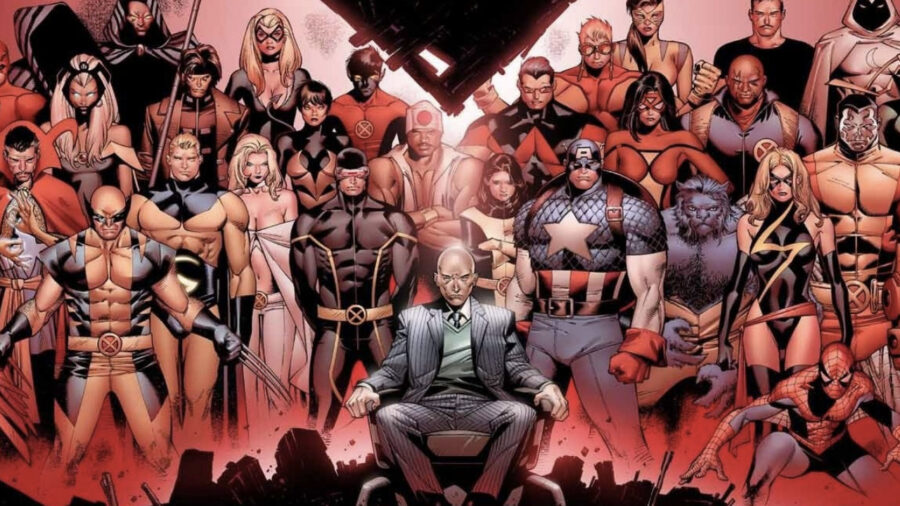
Review: House of M – A World Without Heroes? Publisher: Marvel Comics Writer: Brian Michael Bendis Artist: Olivier Coipel Release Date: June – November 2005 House of M asks a dangerous question. If you could have your heart’s desire, would you take it? Even if it meant living a lie? In this massive 2005 crossover, Brian Michael Bendis explores this existential dilemma. Following the chaos of Avengers: Disassembled, the Avengers and X-Men must decide the fate of the Scarlet Witch. Her breakdown threatens reality itself. But before they can act, the world changes. A Perfect World? The story drops us into an alternate reality. Mutants are the dominant species. Humans are the minority. Everyone has what they always wanted. Peter Parker is a celebrity married to Gwen Stacy. Wolverine is a high-ranking SHIELD agent. Magneto rules the world. Bendis handles this setup brilliantly. He uses the medium to make the reader question their own desires. Would you accept a fake paradise to escape real pain? This concept is fascinating. We see a world where Magneto has won. Yet, in the early panels, he shows striking regret. He repents for dragging his children into his war. This adds depth to a villain who is usually unwavering. Wanda’s Mental State The emotional core of this book is Wanda Maximoff. The slow build-up of her anguish is heartbreaking. She carries the baggage of losing her children and her husband, Vision. Bendis presents these ideas much better here than in Avengers: Disassembled. The execution is less heavy-handed. The narrative flows naturally toward the inevitable conclusion. We know where it is going, but that knowledge makes the journey more somber. The heroes work hard to fix reality, unaware that they are racing toward a tragedy. The Art of Reality Olivier Coipel’s art is a highlight. His pencils capture a phenomenal level of detail. In a story filled with grief, facial expressions matter. Coipel delivers. I also appreciated the costume design. In this alternate universe, the heroes wear different outfits. The attention to detail in these new designs is impressive. It makes the “House of M” world feel lived-in and distinct from the regular Marvel Universe (Earth-616). However, there is one small issue. The cover art often displays costumes that don’t match the interior panels. This is a common issue in comics, but it is distracting here. For a major event from a company like Marvel, you expect better consistency. Why It Matters This story changed everything. It ends with three simple words: “No More Mutants.” This single moment decimated the mutant population. It changed the dynamic of X-Men comics for nearly a decade. Revisiting it now, the stakes feel just as high. It is also fascinating to view this through the lens of the MCU. With WandaVision and Doctor Strange in the Multiverse of Madness, we see live-action adaptations tackling similar themes of grief and reality warping. Final Verdict I am glad I revisited House of M. It remains one of Brian Michael Bendis’ best works. The artwork complements the story perfectly. The themes of PTSD and trauma add weight to the superhero action. There is a reason fans remember this book so fondly. It is arguably one of Marvel’s best crossover events. If you want to understand the modern history of the X-Men, you must read this book. Score: 5/5 More Reviews from BGCP Review: Avengers Disassembled Review: Watchmen

Review: House of M (Marvel Comics) – The Day Mutants Died Read More »

Review – Avengers: Disassembled

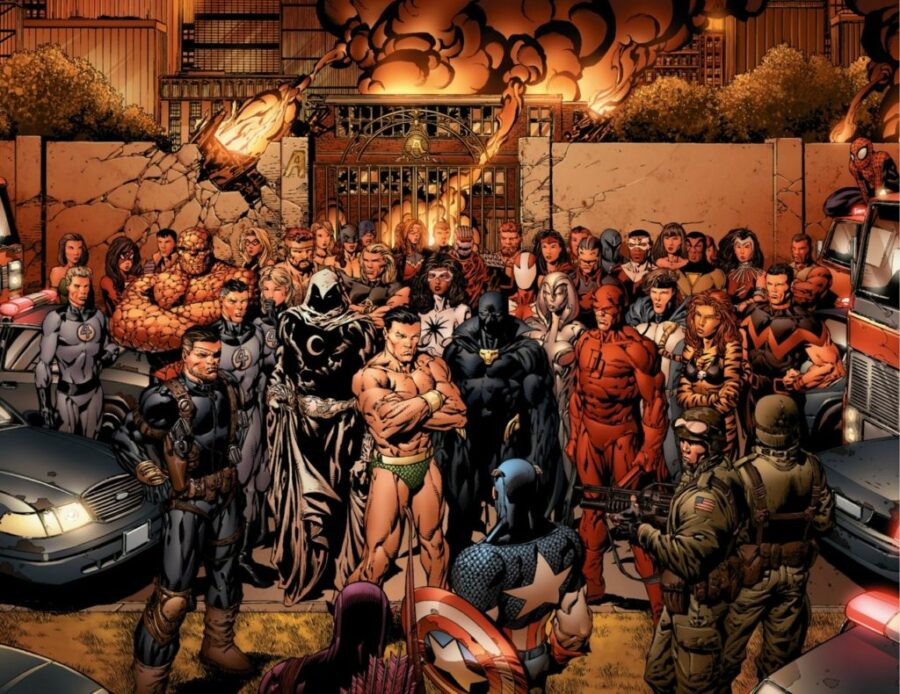
Avengers Disassembled Review: How It Changed Marvel Forever

Review: Avengers Disassembled – The Day the Heroes Fell Publisher: Marvel Comics Writer: Brian Michael Bendis Penciller: David Finch Release Date: August 2004 – January 2005 Avengers Disassembled is infamous. Written by Brian Michael Bendis in 2004, this story arc ended the classic Avengers era. It also paved the way for the modern “New Avengers” line up. The story remains controversial. Bendis treats fan-favourite characters with brutal indifference. At the time, this caused an uproar. The repercussions shook the entire Marvel Universe. But does it hold up today? A Controversial Classic I missed this arc when it first dropped in 2004. I finally read the trade paperback ten years later. Perhaps that delay helped me enjoy it more. Fans took the destruction of their heroes personally at the time. With the benefit of hindsight, we can view it through a historical lens. We know where the characters end up. However, the book is far from perfect. I generally enjoy Brian Michael Bendis’ work. I appreciate his goal here. He wanted to strip down a bloated history. He wanted to clear the crowded roster. This allows characters to have fresh starts. It is similar to DC’s Crisis on Infinite Earths, but on a smaller scale. Unfortunately, the execution feels heavy-handed. The intention is rarely subtle. Chaos Erupts I am glad I read the collected edition. If I had waited week-to-week for single issues, I might have quit. The first few chapters offer inexplicable chaos. There is no clear explanation for the madness. However, the main title is “Chaos.” You certainly can’t accuse Marvel of false advertising. Seeing the team thrown into total disarray is fascinating. The Avengers are usually in control. They protect Earth’s citizens with confidence. Seeing them lose that control so quickly is a shock to both the characters and the reader. The problem is the pacing. Crazy events play out consecutively. There is no time to breathe. We never see the heroes process the gravity of their situation. Major characters die, yet the story breezes past them for the next big shock. This makes some of the boldest story beats feel hollow. Not for Beginners A quick word of advice: Do not start here. If you are new to Marvel comics, this is a terrible entry point. I know Marvel’s convoluted continuity well. Even I struggled to follow certain sections of this story. You need a firm grasp of pre-2004 Avengers history to truly understand the impact. The Art: Dark and Gritty I have mixed feelings about the artwork. David Finch’s pencils capture the grand scale of the story brilliantly. He shows the magnitude of destruction perfectly. However, the intimate moments suffer. The way Finch draws faces often feels out of place. It takes away from the emotional gravity of the situation. Frank D’Armata’s colors don’t always help. His style is bright and bold. I think certain scenes needed a muted palette. The garish colours clash with the darker story beats. Issues with Age Revisiting this book in the modern era reveals some flaws. Specifically, the costumes haven’t aged well. This is especially true for the female characters. We have seen shows like The Boys parody the “closet lasciviousness” of comic art. In that light, the impractical leather and spandex designs stick out like a sore thumb. The Highlight The artistic highlight comes in the finale. The surviving Avengers gather to reminisce. We get a beautiful series of two-page spreads. These show a highlight reel of the Avengers’ greatest moments. Different artists draw each flashback. We see Captain America’s revival. We see Wanda and Vision’s wedding. This savvy decision recaptures classic moments for a modern audience. It allows each artist to put their own spin on history. Final Verdict I have given Bendis’ writing a bit of a bashing in this review. Despite that, I still enjoy this book. I can’t fault the unflinching boldness of the writing. It is refreshing to see our favorite heroes out of their depth. This story had to happen. It set up the massive success of New Avengers and House of M. I understand the fan backlash. But I appreciate the guts it took to publish this. If you know your history and want to see the Avengers break, you will enjoy Avengers Disassembled. Score: 4/5

Avengers Disassembled Review: How It Changed Marvel Forever Read More »

watchmen graphic novel review

Watchmen Review: 5 Reasons It Is A Masterpiece

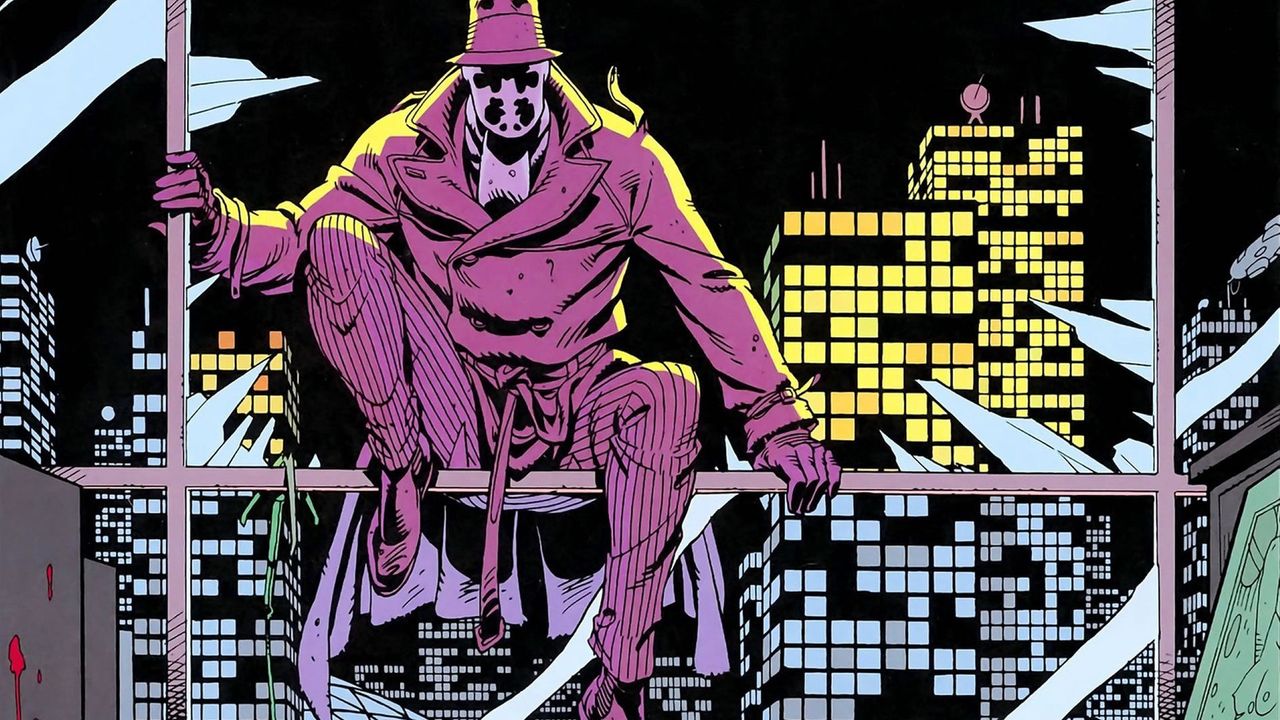
Review: Watchmen – The Graphic Novel That Changed Everything Publisher: DC Comics Year: 1986 – 1987 Writer: Alan Moore Artist: Dave Gibbons Colourist: John Higgins When Watchmen was first released in 1986, it didn’t just tell a story; it deconstructed an entire medium. Written by the legendary Alan Moore and illustrated by the meticulous Dave Gibbons, this 12-issue limited series (now collected as a single graphic novel) is widely considered the “Citizen Kane” of comic books. But nearly 40 years later, does it still hold up? In this review, we revisit the dystopian world of 1985 to see if the Doomsday Clock is still ticking. The Plot: Who Kills the Peacemakers? The story takes place in an alternate 1985 where superheroes (masked vigilantes) are real, but their presence has altered history. The US won the Vietnam War thanks to the god-like Dr. Manhattan, Richard Nixon is still President, and the Cold War is on the brink of nuclear annihilation. The plot kicks off with the murder of The Comedian, a cynical, government-sanctioned hero. His death triggers an investigation by the unstable vigilante Rorschach, who uncovers a conspiracy that threatens to kill millions to save billions. Unlike traditional superhero tales, Watchmen isn’t about saving the day—it’s about the cost of peace and the moral gray areas of power. Character Analysis: Archetypes Deconstructed One of Moore’s greatest achievements is taking the “Charlton Comics” archetypes and twisting them into realistic, flawed human beings. Rorschach (Walter Kovacs): The narrator for much of the book, Rorschach is an absolutist. He sees the world in black and white, refusing to compromise even in the face of Armageddon. He is a fascinating, terrifying look at what happens when a Batman-type figure has no wealth or stability. Dr. Manhattan (Jon Osterman): The only character with actual superpowers. Moore uses him to explore existentialism and detachment. If you could see all of time at once and rearrange atoms with a thought, would human life still matter to you? Ozymandias (Adrian Veidt): The smartest man in the world. He represents the pinnacle of human potential but also the danger of utilitarianism—the idea that the ends always justify the means. Nite Owl (Dan Dreiberg) & Silk Spectre (Laurie Juspeczyk): The most “human” characters, representing the struggle of ordinary people trying to find connection in a world that is falling apart. Visual Mastery: The 9-Panel Grid While Alan Moore’s script is dense and poetic, the visual storytelling by Dave Gibbons is what makes Watchmen a technical masterpiece. Gibbons famously utilised a strict nine-panel grid for almost the entire book. This rigid structure gives the story a rhythmic, ticking-clock pacing. It allows for incredible control over the reader’s eye, making the few moments where the grid breaks (like the giant squid or Dr. Manhattan on Mars) feel truly massive and shocking. John Higgins’ coloring also deserves praise. He avoided the primary colors typical of superheroes, opting instead for a secondary palette of sickly purples, oranges, and greens, giving the world a bruised, uneasy feeling. Key Themes: “Who Watches the Watchmen?” The book’s central question—Quis custodiet ipsos custodes?—is more relevant today than ever. Power and Accountability: In a world where individuals have the power to level cities, who holds them accountable? Moore argues that power inevitably corrupts and isolates. Cold War Anxiety: The looming threat of nuclear war permeates every page. While the Soviet Union is gone, the modern anxiety of global conflict makes this fear relatable to new readers. Deconstruction of the Hero: Watchmen asks: What kind of person would actually put on a mask to fight crime? The answer isn’t a noble altruist; it’s usually someone with deep psychological trauma or a fetish for violence. Is Watchmen Good for New Readers? Verdict: Proceed with Caution. While it is often cited as the “best” graphic novel, it is not the best first graphic novel. As noted in our original review, Watchmen is a satire of superhero tropes. If you don’t know the tropes, you might miss the satire. It’s like trying to appreciate Shrek without ever having seen a Disney fairy tale. You will still enjoy the story, but you won’t catch the subversion. We recommend reading classics like Batman: Year One or All-Star Superman first to understand what Moore is dismantling. Final Verdict Watchmen is a dense, literary, and challenging read. It requires patience, but it rewards you with one of the most intricately plotted mysteries in fiction. The symmetry of the chapters (especially the “Fearful Symmetry” issue) is a masterclass in storytelling that has never been replicated. Whether you’ve seen the Zack Snyder movie or the HBO sequel series, nothing compares to the original text. Score: 10/10 – Essential Reading. More Reviews from BGCP If you enjoyed our deep dive into Watchmen, check out our reviews of other seminal works: Review: Batman The Killing Joke Review: V for Vendetta Review: Swamp Thing – The Root of All Evil

Watchmen Review: 5 Reasons It Is A Masterpiece Read More »

swamp thing root of all evil

Review – Swamp Thing: The Root of All Evil

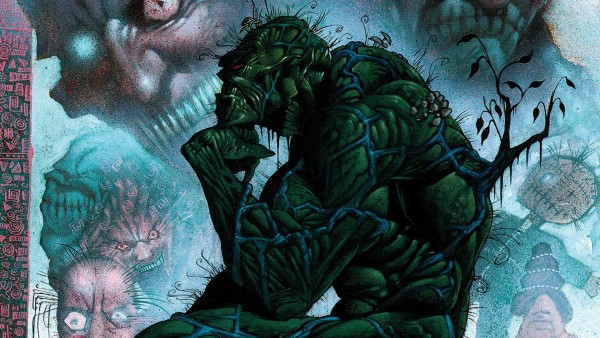
Publisher: DC Comics/Vertigo Writer: Grant Morrison and Mark Millar Art: Phil Hester and Kim DeMulder Coloring: Tajana Wood Lettering: Richard Starkings Cover/Back Art: John Mueller Release Dates: August 2015 Review – Swamp Thing: The Root of All Evil With origins in the 1970s and seeing some small amount of popularity through the 80s, the Swamp Thing series found some of its more solid footing in the early 90s with a four issue arc penned by Grant Morrison, fresh off of Arkham Asylum, and a then young up and comer known as Mark Millar, who would of course go on to write seminal works of his own like The Ultimates, Superman: Red Son, and of course Marvel’s Civil War. Morrison worked with Millar to author those four opening issues, and following that, Millar would continue to write for the remainder of that volume by himself. Today we’ll review Swamp Thing: The Root of All Evil and see if Morrison and Millar’s writing capture the essence of the not so jolly green giant, or if it’s dead on the branch. If you’re at all familiar with the various works of Grant Morrison, you know well enough to expect a story that aims to bend your mind and demands to be revisited and poured over once or twice to really absorb everything that is being laid down in front of you. Swamp Thing: The Root of all Evil’s writing displays all the typical hallmarks of a Grant Morrison tale; weaving in flowery symbolism and esoteric references to ancient gods, shamanic rituals, and the philosophies and theories of psychedelic scholars like Terrance McKenna that might have you feeling a bit like keeping a notepad nearby to keep track of it. The story also features some enjoyably deep cuts from other cosmic corners of the DC universe such as appearances (albeit brief) by Dr. Fate, The Phantom Stranger, and a couple of other familiar faces that solidly ground the tale in the greater DC Universe. Review- Earth-One: Wonder Woman Vol 3 The Root of All Evil almost functions as something of a soft reboot for the character, re-contextualizing Alec Holland’s earlier adventures as the Swamp Thing as some sort of long hallucinogenic trip that leaves Holland, very much looking like a regular man, waking from his dream in the jungles of South America. The pages wear Morrison’s kaleidoscopic style on its sleeve, and even once Millar takes up the pen in full in the back half of the book that feeling of eccentric dread never quite lets up or lets go, though Millar’s writing does noticeably lack the same psychedelic influences that weaved their way through the first half of the story. That said, despite some stylistic differences, Morrison and Millar both craft a poetic, compelling, and oftentimes downright chilling narrative from start to finish. This macabre tale of fate the descent into the mystical unknown is brought to life by the art of Phil Hester (Green Arrow: Quiver and most recently announced as the newest artist on DC’s Superman as of December 2020) with Kim DeMulder filling Hester’s pencils in with inky blacks and deep shadows that hide dark things. The whole spread is colored by Tatjana Wood, who casts the most disturbing elements of the book in a sickening pallor, but also makes room for bright floral greens and reds in the scenes where Swamp Thing exercises his full powers. The art, at first, did take some getting used to, especially if you are accustomed to the more cinematic art styles of later 21st century comics, but it becomes clear before long that the aesthetic presented is perfectly suited for the unflinching horror elements of the book. And they are unflinching. It can’t be stated emphatically enough that this is a book for mature readers, with enough gore, nudity, and overall grotesque imagery to give your deepest nightmares some wonderfully terrifying ideas. All in all, it’s hard not to recommend Swamp Thing: The Root of All Evil upon review, especially since the story as a whole was never collected in trade paperback until very recently (2015), and so may have been missed out on by a lot of readers. However, that recommendation does come with a word of caution: The story can occasionally be confusing, though it is mostly explained by the end, and the imagery does not hold back or pull any punches, joyfully presenting you scene after scene of gothic horror. However, if you’re in the mood for an unsettling, gripping ride, and willing to accept a bit of confusion at the outset of the volume, then this comes highly recommended. Or, if you’ve ever wondered just what that whole Swamp Thing is about and are thinking of taking the plunge, this is as good a place as any to start. Review- JLA- Earth 2 A Tale of Dark Reflections

Review – Swamp Thing: The Root of All Evil Read More »

Scroll to Top