Comic

BGCP Podcasts and Comic Con


BGCP Comic Con was started as The Big Glasgow Comic Page back in July 2012 mostly out of boredom and trying to find more Comic Fans to speak to, The Scottish Facebook Page gathered likes extremely fast as there wasn’t anything like it at the time and eventually this led to a Comic Book Group, Pub Quizzes, Tournaments and eventually a Comic Book Market  based soley in Glasgow.  We organized BGCP Comic Markets for several years until we had outgrown the smaller venues in Glasgow City Centre so set out to run Comic Cons in and out of Glasgow and further over Scotland including East Kilbride, Rutherglen, Loch Lomond, Dunoon, Aberdeen, Bathgate, Edinburgh, Glenrothes, Kirkcaldy and countless more towns and cities. 

BGCP Comic Con is a series of Scottish Conventions that happen in and around Glasgow, Fife and Aberdeen. BGCP also publish articles, reviews and news.

Previous Convention Guests have included Frank Quitely, Al Ewing, Alan Grant, Gary Erskine, Monty Nero, Yishan Li, David Baillie, Grant Perkins, David Bishop, John Lees, Jim Stewart, Tom Foster and Neil Slorance

We cover Comic Books News, Articles and Reviews from Marvel Comics, DC Comics, Image Comics, IDW Publishing, BOOM Studios, Dark Horse Comics and many more. We also provide the same for movies, television and video games.

Here are some of the main companies and characters that BGCP covers – Marvel Comics, DC Comics, Image Comics, IDW Publishing, Dark Horse Comics, Dynamite, BOOM Studios, 2000AD, Titan Comics, Legendary Comics, Millarworld, Aftershock Comics,Valiant Comics.

BGCP Podcasts

BGCP launched the BGCP:Disassembled Podcast in February 2021 and release weekly episodes featuring the latest comic book news and reviews, we also run weekly interviews and have also featured many writers and writers from Marvel, DC, Image and more.
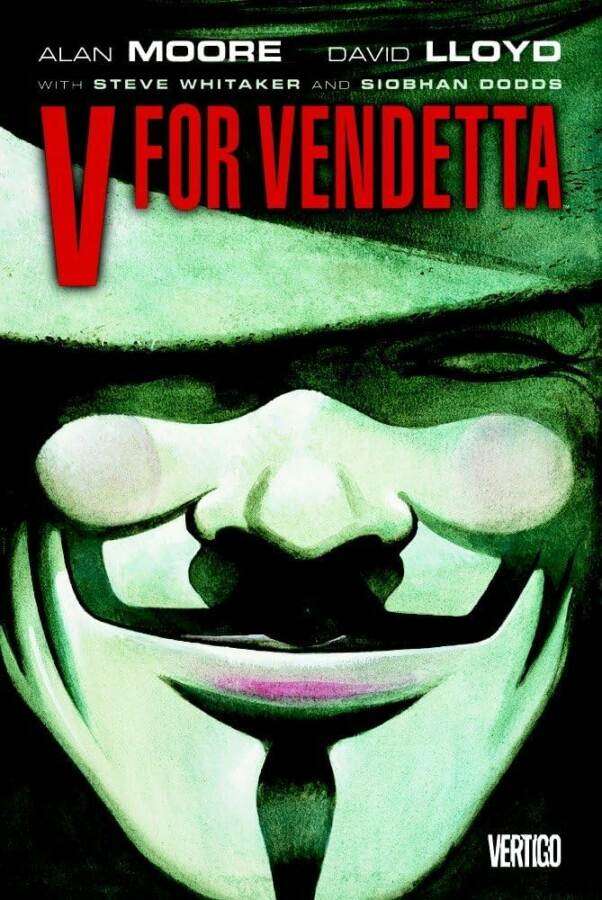
v for vendetta

Review – V For Vendetta

Review – V For Vendetta Publisher: Vertigo Writer: Alan Moore Artists: David Lloyd & Tony Weare Colourist: Steve Whitaker & Siobhan Dodds Letterer: Steve Craddock Release Date: March 1982 – May 1989 V For Vendetta is a 1980’s graphic novel written by Alan Moore and illustrated by David Lloyd. It tells the story of V; an enigmatic, mysterious protagonist hell-bent on bringing down the totalitarian government that runs this story’s version of Britain. Getting to go back and review V For Vendetta it still stands up as a fantastic book, dripping with style, but not lacking in substance. The book is a brilliant and dynamic story and although at times is pretty cool, it is also much more than that. It tackles beliefs and themes that we all have opinions on, because they affect our real lives every day and the older that I get, the more I find myself sympathising with V. More and more as time goes on and we read about people like Edward Snowden and Julian Assange being exiled and prosecuted and we see Mark Zuckerberg sitting with a piece of tape placed over his webcam, it seems that George Orwell’s prediction for humanity in his iconic 1984 story, is sadly becoming more of a reality. Alan Moore and David Lloyd really tap into those 1984esque sci-fi themes of bureaucracy here and give the idea of freedom from totalitarianism a face and a name. V is a tragic character with a terrible past that robbed him of his identity. Instead of letting this break him, he uses it to his advantage and instead becomes an icon for the people. As V famously says; “ideas are bulletproof,” and to write a character that takes on a broken system and make him exceptionally damaged, yet relatable is not an easy task. His methods are extreme and his morals are definitely questionable, but using Evie as a surrogate character for the audience is a masterful way to allow us to relate to Evie while eventually seeing that V was in the right all along just as Evie does by the book’s conclusion. Alan Moore tackles the heavy themes and loaded subtext fantastically in the book, embracing the controversy and extremism of some of the methods V employs to take his freedom back. However he still somehow manages never to be crass or excessive, something which would be easy to do when writing about an unhinged guy that lives in isolation and fantasises about bombing major landmarks. I think the restraint that Moore shows in his writing of V helps viewers to make up their own mind about the character. He is odd enough that I wouldn’t exactly call him relatable but he does have a certain charm and his dialogue is undeniably inspiring. It is also an interesting aside that the book happened to be written and published during the infamous reign of Margaret Thatcher during the 80’s. Whilst reading the book, it’s hard not to look at Thatcher’s cabinet at the time and wonder if the members of Norsefire were actually based off of them. Moore does mention in the forward to the book that the inspiration for writing V came from the reaction he had to the policies being put through by the right wing government of the time and that visceral, strong reaction is certainly felt throughout the book. David Lloyd’s art in the book is absolutely perfect for the story being told. The character design has such a sleek, distinctive look to it. I also appreciate the colour scheme that Steve Whitaker chose to go with here, as I really feel that it helps the book to achieve that timeless quality that it has. There is a reason that V’s iconic design has worked its way into the zeitgeist of modern social issues and became the symbol of online hacking group Anonymous. It is instantly recognisable due to its strikingly bold design. Overall, upon re-evaluating V For Vendetta for review years after I last read it, I can happily report that it still holds up incredibly well. I used to read this book every year on November 5th and I think that may be a tradition that I’ll have to return to as it really is a masterpiece. If you have got this far into my review and still haven’t read the book, do yourself a favour and make it next on your list of things to do, you will not regret it.

Review – V For Vendetta Read More »

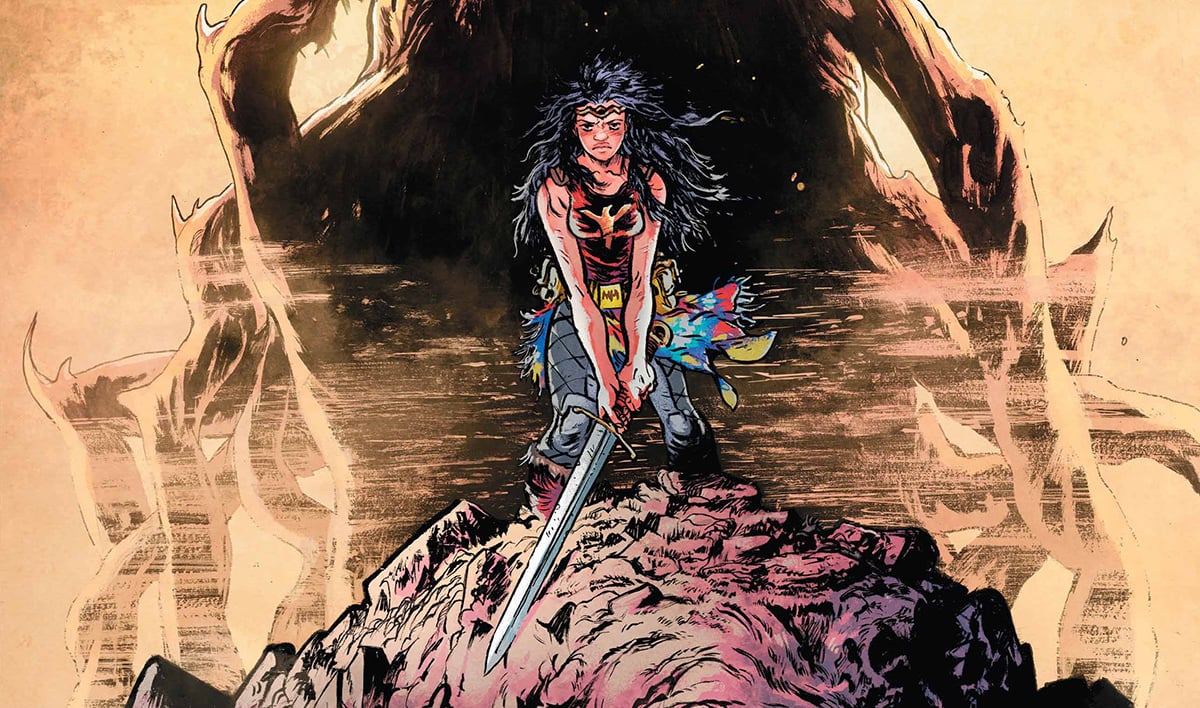
Review – Wonder Woman: Dead Earth

Review – Wonder Woman: Dead Earth Publisher: DC Comics Writer: Daniel Warren Johnson Art: Daniel Warren Johnson Coloring: Michael Spicer Lettering: Rus Wooten Cover/Back Art: Daniel Warren Johnson with Michael Spicer Release Dates: May 2020 INTRODUCTION Black Label has been a bit of a boondoggle for DC Comics since its debut in 2018. It was conceived as a label for ‘adult’ titles, being much more permissive of content like violence, sex, and the words that make comic letterers go #@$&!. This, of course, all went right to hell as soon as there was controversy over a certain piece of anatomy being visible in the very first Black Label title, Batman: Damned. DC Quickly stepped their mature readers label back a bit, and it felt like the imprint became a bit milquetoast and lost in its purpose ever since, with existing classics like All-Star Superman and Batman: White Knight being released with the label slapped on them and nothing that particularly made them any more for adult readers when they were at the time of release. I give you this brief history lesson on the nature of DC Black Label strictly so I can then tell you that Wonder Woman: Dead Earth is an original title exclusive to Black Label and absolutely takes advantage of the imprint’s original purpose, at least insofar as the topic of violence is concerned. This book is gory. It’s dark. It is, dare I say it, metal (Move over, Scott Snyder). But does this story capture the essence of Wonder Woman, a character who it is all too easy to miss the forest for the trees on and turn into an out of character, bloodthirsty warrior? Find out in our review of Wonder Woman: Dead Earth. STORY Dead Earth is an elseworlds title, which means it doesn’t take place anywhere near your standard DC Universe continuity for the uninitiated. The divide from standard continuity is immediately felt as the reader is introduced to a post apocalyptic world where Wonder Woman has just woken from a cryogenic slumber with a wicked case of amnesia. No sooner has our protagonist regained consciousness than she finds herself saving the lives of some friendly scavengers by fighting off an immense monster. Within these first pages, the tone is set. Wonder Woman eviscerates the creature in a shower of blood and viscera, and finds a moment to breathe wonder to herself just what the hell made the earth so… well, dead. From there the story takes a turn for the Mad Max inspired as Wonder Woman (who I will refer to as Diana going forward for the sake of not having to type Wonder Woman ten thousand times) is taken to the dysfunctional dystopic society that her new scavenger friends hail from. We get a dose of everything from a cruel, polygamous despot leader to forced gladiatorial fights for survival and entertainment, and it all feels very Thunderdome. Despite this, it’s never hamfisted and doesn’t ever feel unoriginal, more like loving but noticeable homage. Part of the reason this setting works so soundly is because Daniel Warren Johnson, who plays double duty as both author and artist, uses the harsh world to contrast and highlight Diana’s character brilliantly. The princess of Themyscira is both compassionate and brutally ruthless in combat. Relatively early in the story, she deposes the aforementioned dictator of this society of survivors, but she chooses not to kill him, instead jailing him and even offering him a chance to help her lead. In one particularly memorable scene while Diana is imprisoned by the people she thought would be her new allies, one of her captors incredulously questions a statement she makes about loving all of humanity, even when they betray her. “You’re Crazy!” her new companion turned Judas says, “Who are you to talk about love? You don’t even know me! Nobody can live like you say! It’s inhuman!” “Exactly.” Diana replies knowingly. If nothing else, it’s perfectly clear that Johnson understands Wonder Woman as a concept. She occupies a similar space to Superman (who does make an appearance, of a sort), in that she represents the best of us. An ideal to be striven towards. Unlike most incarnations of the man of steel, however, Diana is also deeply human and flawed, and the balance between these two sides is portrayed masterfully as the story plays out. Of course, yes, we do eventually find out what happened to the world, what happened to the Amazons, and where all the other heroes went, but I’m not about to spoil everything here. The plot points I have covered, believe it or not, all take place in the first of four issues, and I highly recommend you read the rest to get the answers to those burning questions. ARTWORK As mentioned before, Daniel Warren Johnson handles both writing and artistic duties on this book, with the aid of Mike Spicer’s coloring. Johnson’s art style isn’t necessarily what you would expect given the violent nature of the subject, and yet it fits perfectly. It has an almost children’s storybook illustrative quality to it, which matches with the mythical tone of the narrative. The main difference here being most children’s storybooks aren’t full of evisceration blood spouting from gaping wounds. The art is hopeful when it has to be, and incredibly dark when it’s called for. Mike Spicer’s colors have the quality of hand painted animation cels, and he goes a long way to capture the tone of any scene he’s helping set. The desert wastes are composed of browns and oranges, highlighted with vivid crimsons when the action gets particularly visceral. Later in the story these earth tones give way to deep blues and grays when Diana and a few other characters are at sea looking for Themyscira. I can fully understand, granted, if someone is put off at first by the art. It does feel somewhat incongruous at first, if you were expecting something a bit more in line with

Review – Wonder Woman: Dead Earth Read More »

Batman: The Killing Joke

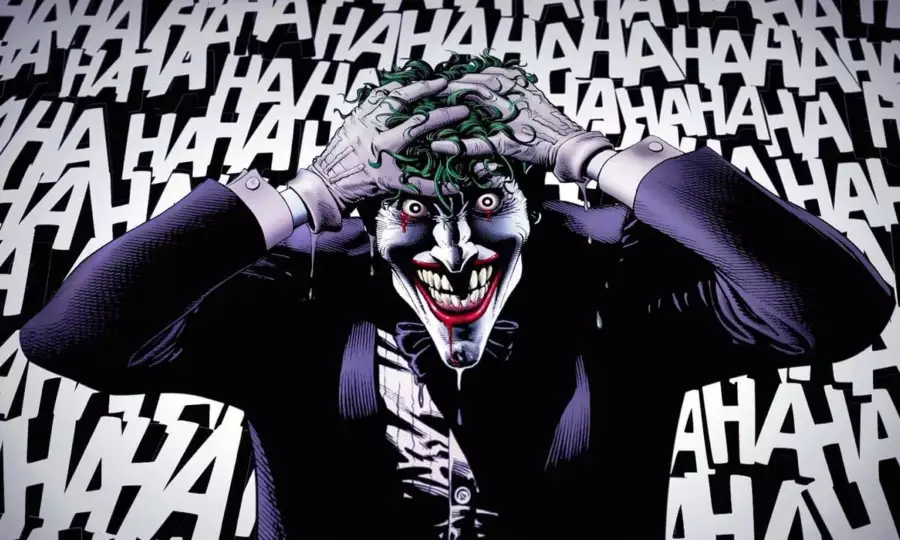
Review – Batman: The Killing Joke

Review – Batman: The Killing Joke Publisher: DC Writer: Alan Moore Artist: Brian Bolland Letterer: Richard Starkings Release Date: March 1988 Batman: The Killing Joke is an iconic graphic novel that tells one of Batman’s darkest tales. The book was written by Alan Moore and was initially intended as a standalone graphic novel before being integrated into Batman’s post crisis continuity. It has been a hugely influential book over the years. Its influence can be seen as recently as 2019 in Todd Phillip’s Joker movie. Reviewing a Batman story as iconic as the Killing Joke 33 years on, it still managed to hold up as a brilliant read. The Killing Joke is less of a traditional comic book story and more of a fascinating case study into the idea that given one awful day, any one of us could descend into madness and emerge changed forever just as the Joker did. The comic tackles the vagueness and ambiguity of where the Joker came from and why he is the way that he is in a beautifully tragic fashion. We are made to sympathise with the character and at certain points while reading the book, I really was on his side. This is a very hard thing to pull off considering this is the same book where he cripples Barbara Gordon and brutally tortures the mind of Jim Gordon. Thankfully a master like Alan Moore is able to weave these elements together to ask deep philosophical questions whilst still creating an entertaining Batman story. I love the way that Moore writes The Dark Knight here, as totally uncompromising and straight to the point. I also love his take on the sheer insanity and lunacy that is the Joker. The art in the book is also masterful. There is an insane level of subtle detail given in every single frame. From the populated mess of desks and countertops, to the white smear of paint on Batman’s glove after touching the decoy Joker’s hand. I have always been a big fan of Brian Bolland’s work on Dredd over the years, but for me this is his best work by far. I also love the way he uses the panels in the book and his clever use of light sources, or lack thereof. I am now going to spoil the ending of the book, so if you have yet to read it, I’d suggest going to do that and then coming back to read on. At the end of the book, Joker is seemingly proved wrong. Batman rescues Jim and he has managed to withstand the Joker’s brutal mental torture. Even after being put through the horror of Joker’s funhouse, Gordon proves that it takes more than one bad day to turn a good person into an insane psychopath. However, in the last few frames of the book we see something very strange, – Batman and Joker sharing a joke. The two laugh together and it is an interesting moment to see both of them put their mutual hatred aside for a second and share a chuckle. We then see the two silhouetted and Batman puts his hands on Jokers shoulders. They both laugh manically and one of the voices ceases laughing. It has been heavily speculated that what we are witnessing here is Batman finally breaking and murdering the Joker; choking him to death whilst laughing like a madman. Could it be that although this one bad day wasn’t enough to drive Gordon insane, it was enough to drive Batman to finally cross the line and murder his most notorious nemesis? Whether you think that there is any truth to this theory or not it is a fascinating, if exceedingly dark concept to consider. This book is an absolute masterpiece from start to finish and definitely earns its place as one of the greatest Batman stories ever told. It still stands up today as one of the greats and is a thrilling ride through the mind of the Clown Prince of Crime. This is also a great one to pick up if you are looking to get into reading Batman comics as it works as a standalone story without any prior continuity knowledge needed.

Review – Batman: The Killing Joke Read More »

Review – House Of M

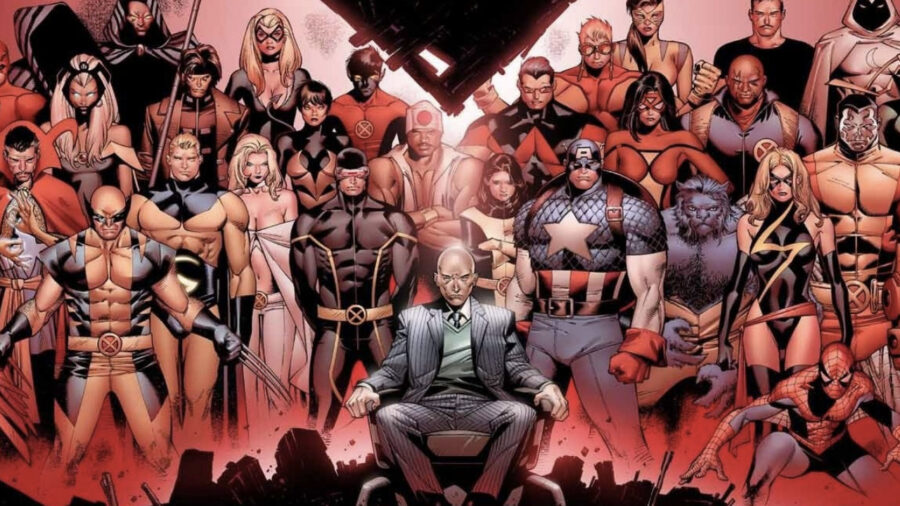
Review – House Of M

Review – House Of M Publisher: Marvel Comics Writer: Brian Michael Bendis Penciller: Olivier Coipel Inker: Tim Townsend Colourist: Frank D’Armata Letterer: Chris Eliopoulos Release Date: June – November 2005 *This review will contain spoilers for House Of M.* If you haven’t already read the book, please go and do so before reading on. In this 2005 crossover event storyline, Brian Michael Bendis tackles an age old existential question. If you could have your heart’s desires and any of the great pains or misfortunes of your life reversed, would you take that offer? Even if it meant leaving behind the old reality that made you the person you are today? And if you did discover the truth; that the new idyllic reality you’ve just woken up in is a lie, would you go back and take back the burden of all of the pain and loss and suffering? I love when comic books attempt to answer deep, resonant questions like these and writers get to use the medium to make the reader wonder how they would handle being put in that situation. Bendis does it fairly well here I think. Following on from the chaotic events of Avengers: Disassembled, House Of M sees Bendis follow up his decimation of Earth’s Mightiest Heroes, with the decimation of mutant-kind. With Marvel’s Wandavision series currently streaming, a lot of fans are revisiting this book in anticipation for the show’s finale. Will we get a parallel where instead of wiping out all mutants, Wanda instead births them into the MCU? Nevertheless, the prospective idea of a mutant as powerful as Wanda Maximoff having a mental breakdown is a fascinating one, which could have devastating effects on a world-altering scale for the universe at large. The way that Bendis presents his ideas here, is much more clearly thought out and less heavy handed than the way that he executed them in Avengers: Disassembled. This is interesting when you consider that Disassembled immediately precedes House of M and both are major event crossover books penned by the same writer. One thing that really stood out to me was the regret that Magneto shows in the early panels of the story. The repentance that he displays for dragging his children into his ultimately futile race-war is striking and as far as I am aware isn’t something that we had ever see him admit up until now. This sense of regret will eventually carry over to the end of the story and become the main catalyst for the event that would drastically change the dynamic of Marvel comics in the years following this story. Revisiting the story, I was worried that armed with the knowledge of how the event ended; I would somehow not enjoy the book as much as I did the first time I read through it. Thankfully I was wrong. Having the knowledge of where all of this is going actually makes the whole thing much more devastating and sombre as you work your way through the eight collected issues. The inevitability of it all and how hard the Avengers and X-Men work to try and prevent a catastrophe like this, makes the whole journey seem so bittersweet. There is a slow build-up of anguish and guilt that mounts within Wanda through the book along with the emotional baggage carried over from prior events which she is still struggling to deal with. All of this leads to Wanda to utter those fateful words and it all works to make the bombshell seem more justifiable, but even more upsetting. I loved the artwork in House of M upon revisiting it. Olivier Coipel’s pencils, along with Tim Townsend’s inks work together to capture a phenomenal level of detail, which in a story with as much grief and anguish as this one, is definitely required. Something else that really stood out to me, – and it’s not something that I usually pick up on when looking at comic book art, – was the attention to detail in the character’s costume design. Obviously there are certain aspects of each respective hero’s costume that we have come to expect to be present, but some of the alternate clothing choices within the House of M universe were also really cool to see drawn with such a high level of detail. The only thing that slightly bothered me in terms of the art was the discrepancy between the cover artwork for each issue and the panels within the issues. Whilst it is very common for a book to use a different artist to draw the covers than the main artist for the book, costume inconsistencies are something hard to ignore, especially from a huge company like Marvel. I realize that this is a very pernickety problem to have, but it is something that I couldn’t help but pick up on and it did bother me enough to bring it up here. Overall, I am glad that I revisited this book. It is arguably one of Brian Michael Bendis’ best and the fantastic artwork on display compliments the book’s storyline phenomenally. It is also fascinating to see themes like PTSD and existential trauma through the eyes of an ultra-powerful character like Wanda Maximoff. There is a reason why this book is remembered so fondly and I think that it is one of Marvel’s best ever crossover event books. Click here to read our Avengers: Disassembled Review.

Review – House Of M Read More »

Review – Avengers: Disassembled

Review – Avengers: Disassembled

Review – Avengers: Disassembled Publisher: Marvel Comics Writer: Brian Michael Bendis Penciller: David Finch Inker: Danny Miki Colourist: Frank D’Armata Letterer: Albert Deschesne Release Date: August 2004 – January 2005 Avengers: Disassembled is an infamous 2004 story arc written by Brian Michael Bendis. The story serves as somewhat of an ending to the early 2000’s Avengers line-up and it sets up a new beginning for the heroes involved. The story is notoriously controversial for its callously brutal treatment of some fan favourite characters, which was a big deal at the time due to the repercussions it caused within the larger Marvel universe.  I didn’t read the arc when it was released in 2004, instead first reading it in trade paperback form ten years later in 2014. This is perhaps why I actually really enjoyed this book upon first reading it and still enjoy it today. I believe at the time when this was the current Avengers line-up, people took the handling of their characters more personally; whereas with the benefit of hindsight and where the characters are at today, it is easier to see them through a more detached historical lens. However, that’s not to say that the book is perfect. For the most part, I enjoy the work of Brian Michael Bendis and I appreciate what he is attempting with this story arc. The events of the book aren’t quite on the universe-shifting scale of DC’s Crisis On Infinite Earths, but the aim is similar: to strip down a somewhat bloated history and crowded roster and allow the characters to have individual fresh starts. However, the execution is somewhat heavy handed at times and the intention is often less than subtle.  I am glad that I got to read this story for the first time as a TPB collecting the entire story arc. If I had to wait week-to-week for this arc to release, then I could see my patience wearing thin, as the first few issues see inexplicable chaos take place without any clear explanation whatsoever. If I was to witness this for the first time without being able to read on to the point of explanation, then there is a good chance that I would have given up on this arc rather than having to wait months to figure out what is going on. However, the title of the main arc is ‘Chaos,’ so you certainly can’t accuse Marvel of false advertising here. Seeing the whole team thrown into complete disarray in such a short span of time is fascinating. At this point, the Avengers are so used to being in control and being trusted to protect Earth’s citizens, that it does come as a complete shock to both the characters within the story and to the reader that control can be lost so quickly. The trouble with having a bunch of crazy events play out consecutively without a minute to breathe, is that we never get to see the heroes contemplate the gravitas of their situation. The fact that the deaths of major characters are just breezed over for the sake of the next big shock, ends up making some of the bolder story beats feel somewhat hollow. Also, just as a quick word of advice, if you are new to Marvel comics then this would be a terrible place to start. I am very familiar with the convoluted continuity of Marvel’s comics and even I struggle to take in everything that takes place in certain sections of this story.  I have somewhat of a mixed opinion on the artwork in this book. There are certain points where I feel that the grand scale of the story being told is put across brilliantly through David Finch’s pencils; showing the grand magnitude of certain major events and showing the full extent of their devastating effects. However in some of the more intimate moments, the way that he chooses to draw his faces and expressions, slightly takes away from the gravity of the situation and tonally feels a bit out of place. I don’t think that the choice of garish colours from Frank D’Armata helps with that. Although bright and bold tends to be D’Armata’s style when colouring, I think that certain scenes could have used a slightly more subtle, muted colour palette so as not to take away from some of the darker story beats.  Additionally, revisiting this book in a post Me-Too era, some of the costumes haven’t aged very well in hindsight, – especially the female ones. After seeing media like Watchmen and The Boys parody a lot of the closet lasciviousness that has taken place in comic book art over the years, some of the more impractical leather and spandex designs stick out like a sore thumb.  The clear highlight in terms of the book’s artwork comes in the finale section of the story when the surviving Avengers reminisce and we are gifted with a beautiful series of two page spreads showing a highlight reel of the Avengers greatest moments over the years. Each recreates a classic moment such as Captain America being discovered and revived or Wanda and Vision’s wedding and they are each drawn by a different artists. This savvy decision allows these moments to be recaptured for the modern audience and allows each artist to put their own spin on the highlighted moments. Overall, although I have gave Bendis’ writing a bit of a bashing through this review, I still enjoy this book. I can’t fault the unflinching boldness of the writing and I think it’s actually somewhat refreshing to see our favourite heroes totally out of their depth every once in a while. I do feel that this story had to happen in order to set up what was to come and although I understand the fan backlash, I also appreciate the guts it took to put out a story like this. As long as you have a firm grasp on the pre 2004 Avengers history and don’t mind

Review – Avengers: Disassembled Read More »

Review – Watchmen

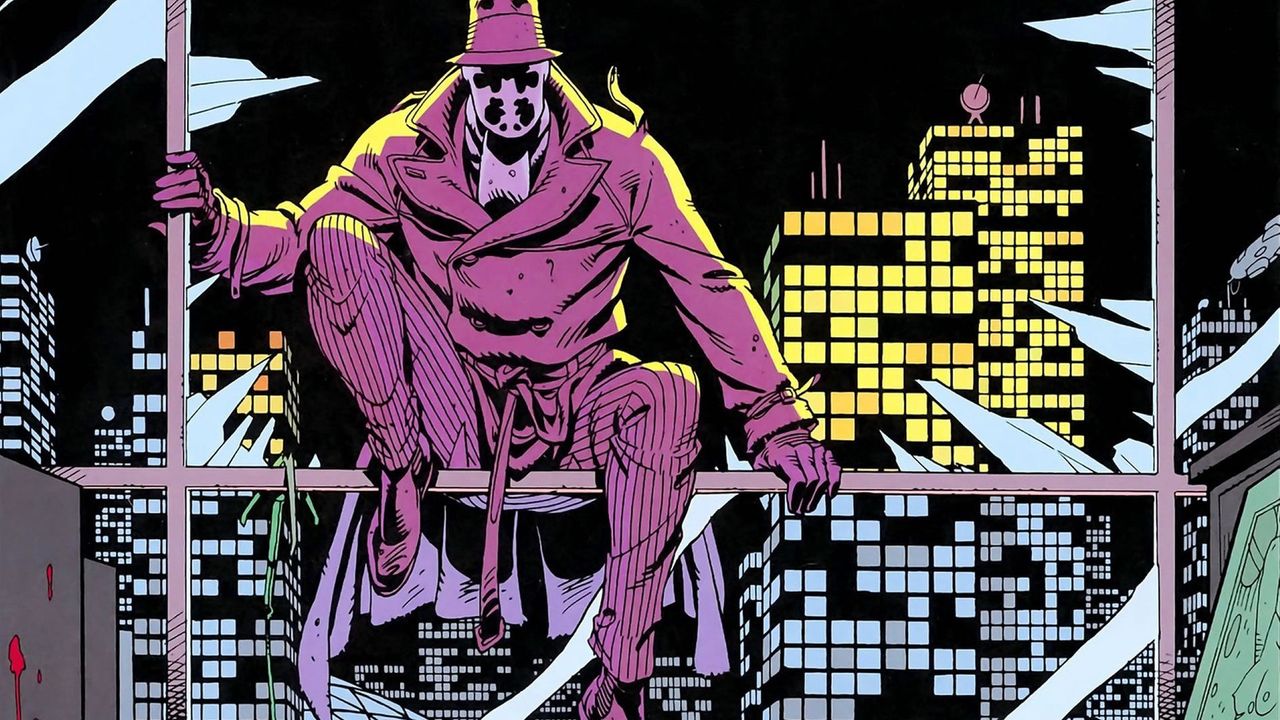
Review – Watchmen Publisher – DC Comics Year – 1986 – 1987 Writer – Alan Moore Artist – Dave Gibbons Colourist – John Higgins Watchmen is a seminal graphic novel written by Alan Moore and first released in 1986. The novel is considered by the majority of comic book fans to be a deep, self-referential work of genius. Moore uses this book to deconstruct what it means to be a ‘hero.’ It is easy to look at Superman or Batman and wonder what it would be like to have Godlike powers or a huge array of crime fighting gadgets. It is a much scarier concept to imagine people like this actually existing in the real world which Moore does here using the political turmoil of the 1980s as the backdrop. It is also interesting to bear in mind that the issues present in the book were contemporary issues at the time that Watchmen was written. For me, that is the genius of this book; just how relevant it is to the real world, both at the time it was written and today. The idea of the elite doing what they have to for what they believe is best for humanity, but having no one to question or monitor them. The famous quote, ‘Who watches the Watchmen?’ could be applied to multiple leaders on either side of the political debate. The writing is masterful in the book. Every line of dialogue spoken is laced with multiple layers of nuance and subtext. Nothing is wasted here in terms of the dialogue and at no point does it feel expositional or out of context for the story being told. I also find it fascinating that this book, which put American political history and social issues under a microscope of scrutiny, was created by two British men. Sadly, the issues of race relations and political division explored in Watchmen have only become more relevant since the book was first published. One caveat I will highlight is that this is not a good entry point into comic books. I often see this book recommended when folks ask what the best entry points are to comic books. I really feel that Watchmen would be better appreciated by someone who is already familiar with the tropes of a typical superhero story and the character archetypes involved. The satire present in the book works best if the reader already has an understanding of the comic book genre as it functions better when read as a deconstruction of the superhero genre, rather than as a standalone superhero story. At the time it was released, Watchmen provided a more cerebral experience than anything that had been published by The Big Two up until that point and is more adult in terms of its themes than most other graphic novels; exploring things like abuse of power, conspiracy, cancer, sexual assault and prostitution. This was one of the first times that taboo themes such as these were explored in the comic book medium and they changed the industry forever going forward. I have heard many stories over the years of how Alan Moore would leave notes containing several detailed paragraphs on direction for Dave Gibbons to draw and extremely simple panel. A method that could sound fairly peculiar to some, but the proof is on the page and it certainly resulted in a striking end result. Review – Batman: The Killing Joke It’s not even the artwork itself that I love in Watchmen, but the presentation of it. From the satisfying way that the panels are laid out using the nine-panel grid technique on each page, to the remarkable use of symmetry on certain pages, to the densely populated background furniture which makes the world feel more lived in, the way that the art is presented in the book is a joy to behold. The artwork also plays a huge part in what makes the book so iconic; the symbols that are present time and time again throughout the story, such as the Smiley Face badge and the Doomsday Clock, have helped Watchmen to stand the test of time and are a huge reason why the book is still so well known and adored today. Overall, upon revisiting Watchmen, it is still as great today as it was upon its release 35 years ago. It is still bitingly pertinent to today’s political climate and it is still an extremely entertaining book. It is also valuable on a creative level as well; when you really take a minute to appreciate what Moore and Gibbons were able to achieve here, it is pretty astonishing. Review – V For Vendetta  

Review – Watchmen Read More »

swamp thing root of all evil

Review – Swamp Thing: The Root of All Evil

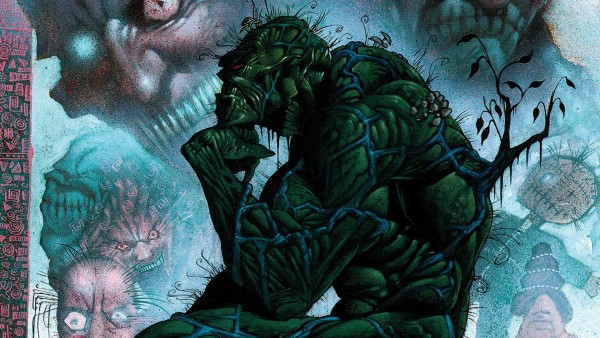
Publisher: DC Comics/Vertigo Writer: Grant Morrison and Mark Millar Art: Phil Hester and Kim DeMulder Coloring: Tajana Wood Lettering: Richard Starkings Cover/Back Art: John Mueller Release Dates: August 2015 Review – Swamp Thing: The Root of All Evil With origins in the 1970s and seeing some small amount of popularity through the 80s, the Swamp Thing series found some of its more solid footing in the early 90s with a four issue arc penned by Grant Morrison, fresh off of Arkham Asylum, and a then young up and comer known as Mark Millar, who would of course go on to write seminal works of his own like The Ultimates, Superman: Red Son, and of course Marvel’s Civil War. Morrison worked with Millar to author those four opening issues, and following that, Millar would continue to write for the remainder of that volume by himself. Today we’ll review Swamp Thing: The Root of All Evil and see if Morrison and Millar’s writing capture the essence of the not so jolly green giant, or if it’s dead on the branch. If you’re at all familiar with the various works of Grant Morrison, you know well enough to expect a story that aims to bend your mind and demands to be revisited and poured over once or twice to really absorb everything that is being laid down in front of you. Swamp Thing: The Root of all Evil’s writing displays all the typical hallmarks of a Grant Morrison tale; weaving in flowery symbolism and esoteric references to ancient gods, shamanic rituals, and the philosophies and theories of psychedelic scholars like Terrance McKenna that might have you feeling a bit like keeping a notepad nearby to keep track of it. The story also features some enjoyably deep cuts from other cosmic corners of the DC universe such as appearances (albeit brief) by Dr. Fate, The Phantom Stranger, and a couple of other familiar faces that solidly ground the tale in the greater DC Universe. Review- Earth-One: Wonder Woman Vol 3 The Root of All Evil almost functions as something of a soft reboot for the character, re-contextualizing Alec Holland’s earlier adventures as the Swamp Thing as some sort of long hallucinogenic trip that leaves Holland, very much looking like a regular man, waking from his dream in the jungles of South America. The pages wear Morrison’s kaleidoscopic style on its sleeve, and even once Millar takes up the pen in full in the back half of the book that feeling of eccentric dread never quite lets up or lets go, though Millar’s writing does noticeably lack the same psychedelic influences that weaved their way through the first half of the story. That said, despite some stylistic differences, Morrison and Millar both craft a poetic, compelling, and oftentimes downright chilling narrative from start to finish. This macabre tale of fate the descent into the mystical unknown is brought to life by the art of Phil Hester (Green Arrow: Quiver and most recently announced as the newest artist on DC’s Superman as of December 2020) with Kim DeMulder filling Hester’s pencils in with inky blacks and deep shadows that hide dark things. The whole spread is colored by Tatjana Wood, who casts the most disturbing elements of the book in a sickening pallor, but also makes room for bright floral greens and reds in the scenes where Swamp Thing exercises his full powers. The art, at first, did take some getting used to, especially if you are accustomed to the more cinematic art styles of later 21st century comics, but it becomes clear before long that the aesthetic presented is perfectly suited for the unflinching horror elements of the book. And they are unflinching. It can’t be stated emphatically enough that this is a book for mature readers, with enough gore, nudity, and overall grotesque imagery to give your deepest nightmares some wonderfully terrifying ideas. All in all, it’s hard not to recommend Swamp Thing: The Root of All Evil upon review, especially since the story as a whole was never collected in trade paperback until very recently (2015), and so may have been missed out on by a lot of readers. However, that recommendation does come with a word of caution: The story can occasionally be confusing, though it is mostly explained by the end, and the imagery does not hold back or pull any punches, joyfully presenting you scene after scene of gothic horror. However, if you’re in the mood for an unsettling, gripping ride, and willing to accept a bit of confusion at the outset of the volume, then this comes highly recommended. Or, if you’ve ever wondered just what that whole Swamp Thing is about and are thinking of taking the plunge, this is as good a place as any to start. Review- JLA- Earth 2 A Tale of Dark Reflections

Review – Swamp Thing: The Root of All Evil Read More »

Scroll to Top