Comic Book Analysis

v for vendetta

V For Vendetta Graphic Novel: Alan Moore’s Masterpiece

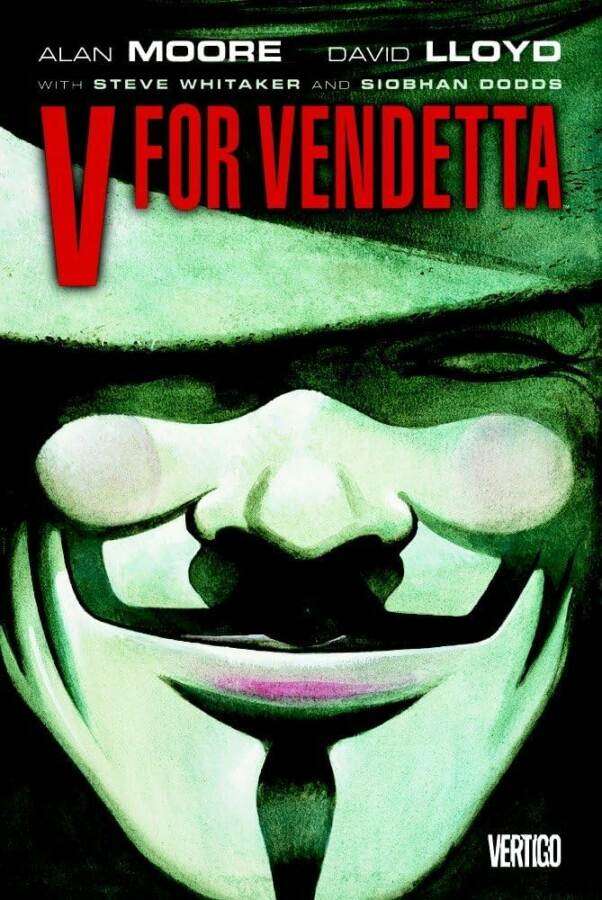
V For Vendetta Graphic Novel Review: Alan Moore’s Masterpiece By Daniel Boyd INTRODUCTION: Why Ideas are Bulletproof When discussing the most influential comics of all time, the V For Vendetta Graphic Novel is always at the top of the list. Originally written by Alan Moore and illustrated by David Lloyd, this masterpiece remains a chillingly relevant exploration of identity, anarchy, and resistance. In this review, we revisit the dystopian London of the Norsefire regime to see why the V For Vendetta Graphic Novel continues to be a ‘bulletproof’ idea for modern readers. Getting to go back and re-evaluate this classic, it’s clear that the book still stands as a fantastic achievement, dripping with style and heavy on substance. STORY: A 1984-esque Dystopia In this V For Vendetta Graphic Novel Review, we examine how Moore taps into the fears of 1980s Britain to create a timeless dystopia. The narrative follows Evie, a young woman saved by a masked revolutionary known only as “V.” V is a tragic character whose past was stolen by a broken system. Instead of breaking, he becomes an icon. As V famously says, “ideas are bulletproof.” Moore uses Evie as a surrogate for the audience, allowing us to witness V’s extreme methods and questionable morals through her eyes. While his actions are controversial, his dialogue is undeniably inspiring, pushing the reader to question the nature of freedom and government control. ARTWORK: The Iconic Design of David Lloyd A crucial part of any V For Vendetta Graphic Novel Review is acknowledging the striking visual work of David Lloyd. The art is perfect for the grim, noir-soaked version of London presented on the page. Character Design: The Guy Fawkes mask has moved beyond the page to become a real-world symbol of resistance and the group Anonymous. Color Palette: Steve Whitaker’s colors give the book a timeless quality, avoiding the garish tones often found in 80s comics. Atmosphere: The use of shadows and tight framing creates a sense of claustrophobia that mirrors the suffocating nature of the Norsefire government. VERDICT: The Final V For Vendetta Graphic Novel Review Overall, it is a joy to report that this book holds up incredibly well. It is a masterpiece of the medium that should be read every year—perhaps on the 5th of November. If you haven’t read it yet, do yourself a favor and make it the next book on your list. Story: 10/10 Art: 10/10 Legacy: Unmatched Check out our other classic reviews: Review – Watchmen Review – Swamp Thing: The Root of All Evil Ready to join the revolution? Buy V For Vendetta on Amazon.

V For Vendetta Graphic Novel: Alan Moore’s Masterpiece Read More »
Batman: The Killing Joke

Review: The Killing Joke – A Flawed Masterpiece?

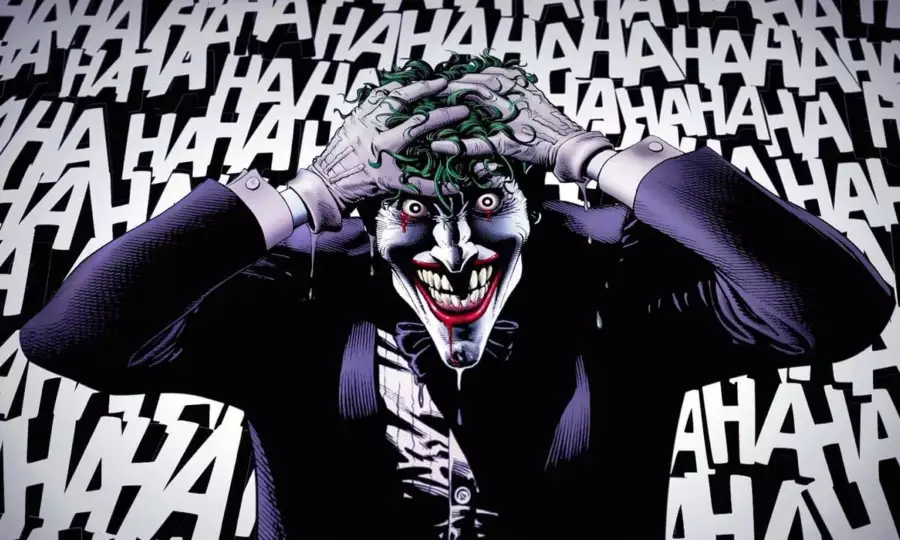
Publisher: DC Comics Writer: Alan Moore Artist: Brian Bolland Release Year: 1988 Batman: The Killing Joke is iconic. Written by the legendary Alan Moore and illustrated by Brian Bolland, this graphic novel changed the Dark Knight forever. Initially, it was intended as a standalone “Elseworlds” tale. However, it was so powerful that DC integrated it into the main continuity. Consequently, its influence is massive. You can see its DNA in everything from Tim Burton’s 1989 movie to the Batman: Arkham video game series (check out our Arkham Asylum Review here). But reviewing it nearly 40 years later, does it still hold up? The Premise: Madness is Gravity The story is less of a traditional superhero fight. Instead, it serves as a psychological case study. The Joker has a terrifying theory. He believes that “one bad day” is all it takes to turn the sanest man alive into a lunatic. To prove this, he targets Commissioner Jim Gordon. Furthermore, the comic tackles the Joker’s origin with beautiful tragedy. Moore weaves a tale of a failed comedian who loses everything in a single day. We sympathize with him. In fact, at certain points, you might even find yourself on his side. This is a difficult feat to pull off, considering the horrific crimes he commits in these pages. The Controversy: Barbara Gordon We cannot discuss The Killing Joke without addressing the elephant in the room. In his attempt to break Jim Gordon, the Joker shoots and paralyzes Barbara Gordon (Batgirl). Admittedly, this moment remains controversial. Critics argue it treats Barbara as a mere plot device. However, this tragedy eventually led to her reinvention as Oracle, one of the most important characters in the DC Universe. Moore’s writing is uncompromising, but it is undeniably brutal. The Art: Brian Bolland’s Masterpiece The writing is deep, yet the art is what makes this book legendary. Brian Bolland is a master of detail. Every frame is packed with nuance. From the cluttered desks of the police station to the white smear of paint on Batman’s glove, nothing is accidental. Moreover, Bolland’s use of light—or lack thereof—is genius. His version of the Joker is terrifyingly human. The manic expressions and detailed linework make this arguably the best the Clown Prince of Crime has ever looked. The Ending: Did Batman Kill The Joker? (Spoilers Ahead) The ending of The Killing Joke is the subject of endless debate. Batman rescues Jim Gordon. Despite the torture, Gordon remains sane. He demands Batman bring the Joker in “by the book,” proving the villain wrong. Nevertheless, the final panels are ambiguous. Batman and Joker share a joke in the rain. They laugh together. Then, the view shifts to their feet. The laughter stops abruptly. The lights go out. Did Batman finally snap? Grant Morrison famously theorized that Batman kills him. Hence the title: The Killing Joke. Whether you believe this theory or not, the ambiguity makes the ending perfect. Final Verdict Batman: The Killing Joke is an absolute masterpiece. It is short, sharp, and shocking. Therefore, it earns its place as one of the greatest graphic novels ever told. If you are looking to get into Batman comics, this is a great starting point. It requires no prior knowledge, yet it delivers a complete story. Score: 5/5 More Reviews from BGCP Review: Watchmen Review: Avengers Disassembled Check out our upcoming Comic Con Events

Review: The Killing Joke – A Flawed Masterpiece? Read More »

watchmen graphic novel review

Watchmen Review: 5 Reasons It Is A Masterpiece

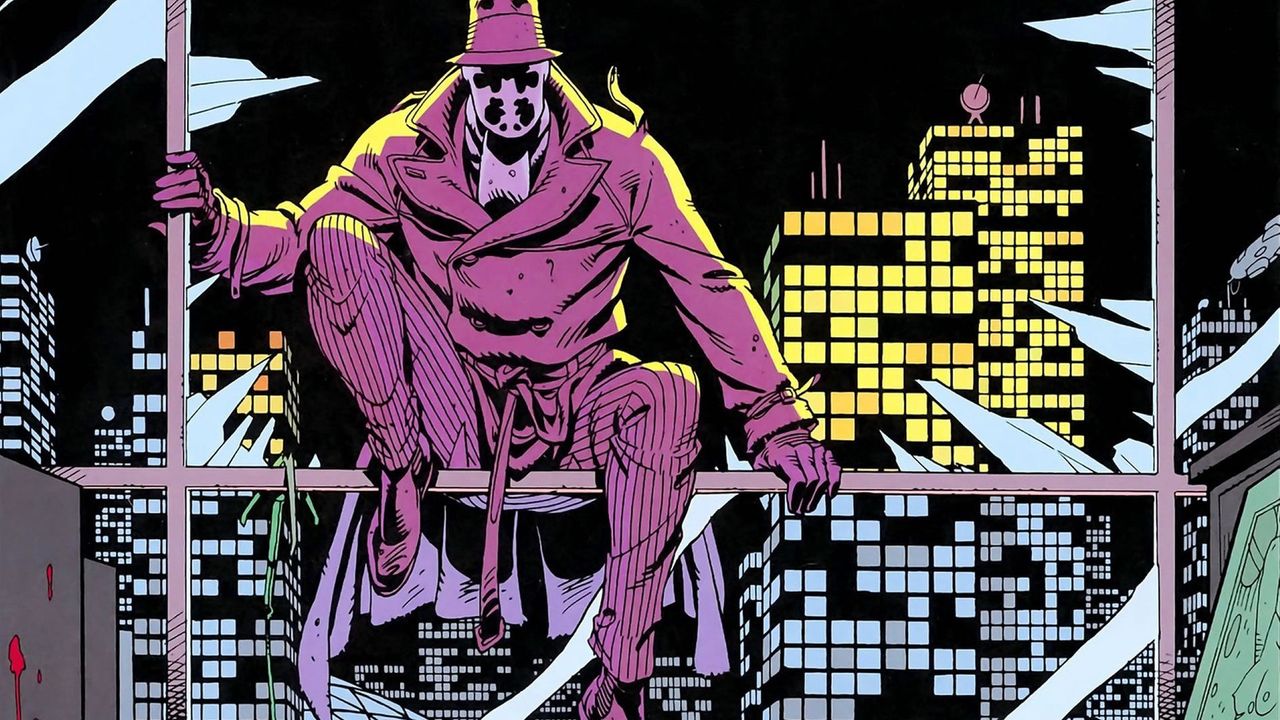
Review: Watchmen – The Graphic Novel That Changed Everything Publisher: DC Comics Year: 1986 – 1987 Writer: Alan Moore Artist: Dave Gibbons Colourist: John Higgins When Watchmen was first released in 1986, it didn’t just tell a story; it deconstructed an entire medium. Written by the legendary Alan Moore and illustrated by the meticulous Dave Gibbons, this 12-issue limited series (now collected as a single graphic novel) is widely considered the “Citizen Kane” of comic books. But nearly 40 years later, does it still hold up? In this review, we revisit the dystopian world of 1985 to see if the Doomsday Clock is still ticking. The Plot: Who Kills the Peacemakers? The story takes place in an alternate 1985 where superheroes (masked vigilantes) are real, but their presence has altered history. The US won the Vietnam War thanks to the god-like Dr. Manhattan, Richard Nixon is still President, and the Cold War is on the brink of nuclear annihilation. The plot kicks off with the murder of The Comedian, a cynical, government-sanctioned hero. His death triggers an investigation by the unstable vigilante Rorschach, who uncovers a conspiracy that threatens to kill millions to save billions. Unlike traditional superhero tales, Watchmen isn’t about saving the day—it’s about the cost of peace and the moral gray areas of power. Character Analysis: Archetypes Deconstructed One of Moore’s greatest achievements is taking the “Charlton Comics” archetypes and twisting them into realistic, flawed human beings. Rorschach (Walter Kovacs): The narrator for much of the book, Rorschach is an absolutist. He sees the world in black and white, refusing to compromise even in the face of Armageddon. He is a fascinating, terrifying look at what happens when a Batman-type figure has no wealth or stability. Dr. Manhattan (Jon Osterman): The only character with actual superpowers. Moore uses him to explore existentialism and detachment. If you could see all of time at once and rearrange atoms with a thought, would human life still matter to you? Ozymandias (Adrian Veidt): The smartest man in the world. He represents the pinnacle of human potential but also the danger of utilitarianism—the idea that the ends always justify the means. Nite Owl (Dan Dreiberg) & Silk Spectre (Laurie Juspeczyk): The most “human” characters, representing the struggle of ordinary people trying to find connection in a world that is falling apart. Visual Mastery: The 9-Panel Grid While Alan Moore’s script is dense and poetic, the visual storytelling by Dave Gibbons is what makes Watchmen a technical masterpiece. Gibbons famously utilised a strict nine-panel grid for almost the entire book. This rigid structure gives the story a rhythmic, ticking-clock pacing. It allows for incredible control over the reader’s eye, making the few moments where the grid breaks (like the giant squid or Dr. Manhattan on Mars) feel truly massive and shocking. John Higgins’ coloring also deserves praise. He avoided the primary colors typical of superheroes, opting instead for a secondary palette of sickly purples, oranges, and greens, giving the world a bruised, uneasy feeling. Key Themes: “Who Watches the Watchmen?” The book’s central question—Quis custodiet ipsos custodes?—is more relevant today than ever. Power and Accountability: In a world where individuals have the power to level cities, who holds them accountable? Moore argues that power inevitably corrupts and isolates. Cold War Anxiety: The looming threat of nuclear war permeates every page. While the Soviet Union is gone, the modern anxiety of global conflict makes this fear relatable to new readers. Deconstruction of the Hero: Watchmen asks: What kind of person would actually put on a mask to fight crime? The answer isn’t a noble altruist; it’s usually someone with deep psychological trauma or a fetish for violence. Is Watchmen Good for New Readers? Verdict: Proceed with Caution. While it is often cited as the “best” graphic novel, it is not the best first graphic novel. As noted in our original review, Watchmen is a satire of superhero tropes. If you don’t know the tropes, you might miss the satire. It’s like trying to appreciate Shrek without ever having seen a Disney fairy tale. You will still enjoy the story, but you won’t catch the subversion. We recommend reading classics like Batman: Year One or All-Star Superman first to understand what Moore is dismantling. Final Verdict Watchmen is a dense, literary, and challenging read. It requires patience, but it rewards you with one of the most intricately plotted mysteries in fiction. The symmetry of the chapters (especially the “Fearful Symmetry” issue) is a masterclass in storytelling that has never been replicated. Whether you’ve seen the Zack Snyder movie or the HBO sequel series, nothing compares to the original text. Score: 10/10 – Essential Reading. More Reviews from BGCP If you enjoyed our deep dive into Watchmen, check out our reviews of other seminal works: Review: Batman The Killing Joke Review: V for Vendetta Review: Swamp Thing – The Root of All Evil

Watchmen Review: 5 Reasons It Is A Masterpiece Read More »

Scroll to Top