Mark Millar

2000ad scotland

The Tartan Takeover: How Scots Built 2000 AD (Legacy)

Introduction: The Soul of the Galaxy’s Greatest Comic When comic fans talk about the “British Invasion,” they often focus on the names that went to America. But the heart of that movement was forged in the pages of 2000 AD by a powerhouse of talent from north of the border. At the center of it all stood Alan Grant. While 2000 AD is a British institution, its most iconic eras were defined by a “Tartan Takeover.” Alan Grant didn’t just write stories; he injected the comic with a uniquely Scottish brand of dark humor, political satire, and deep human empathy. Alongside his “partner in crime” John Wagner (raised in Greenock), Grant turned a weekly sci-fi magazine into a global cultural force. 1. The Grant & Wagner Powerhouse Alan Grant and John Wagner redefined Judge Dredd during the 1980s, creating what many consider the “Golden Age” of the character. Grant’s writing was fueled by a disdain for authority and a sharp, satirical wit. 2. The Heart of the Mutant: Strontium Dog If Dredd was the head of the comic, Strontium Dog (Johnny Alpha) was its heart. Grant became the primary voice of this mutant bounty hunter, using the series to explore themes of prejudice and social exclusion. 3. The “Glasgow Mafia” & The Mentor In the 90s, the “Glasgow Mafia”—Grant Morrison, Mark Millar, and Frank Quitely—took the industry by storm. They stood on the shoulders of Alan Grant, whose success with Batman in the late 80s opened the doors for Scottish talent at DC Comics. 4. Gordon Rennie: The Workhorse of the North A mainstay of the “Prog” for decades, Gordon Rennie is the writer who arguably “nails” the grit of the 2000 AD universe better than anyone else. 5. Jim Alexander: The Master of Calhab Jim Alexander famously expanded the Dredd universe into a “post-apocalyptic Scotland” with Calhab Justice, bringing a grounded, local perspective to the Mega-City world. 6. Gary Erskine: The Technical Visionary Paisley’s Gary Erskine provided the industrial, cinematic aesthetic that made the future feel real. His technical detail is legendary among fans. Conclusion: A Legend Never Truly Dies Alan Grant passed away in 2022, but his influence is everywhere—from the superhero movies filmed in Glasgow to the vibrant indie comic scene in Scotland. He taught us that the future doesn’t belong to the law; it belongs to the rebels.

The Tartan Takeover: How Scots Built 2000 AD (Legacy) Read More »

BGCP Interviews Mark Abnett (Aroha Comics)

BGCP Interviews Mark Abnett (Aroha Comics) This week Massimo sits down for a chat with Scottish based New Zealand Born comic creator Mark Abnett to talk about his Kickstarter for the latest issue of his series ‘This Land’. They discuss the book, Mark’s comic career so far, The story writing process and how Mark hopes to bring the Maori Culture to a broader audience with his work. Mark is the owner of Aroha Comics and the writer of “SCHISM” with Glaswegian Artist Chris Connelly and ‘This Land’ which you can purchase from here Follow Aroha Comics on Twitter to get all the latest updates about ‘This Land’ – @ArohaComics Follow Mark on Twitter @MarkAbnett Check out BGCP’s review of This Land #1 and #2 here Drop us a like if you enjoyed and sub to the channel for more upcoming interviews with awesome creators. Join us on Discord, Twitter, Instagram, etc – https://linktr.ee/BGCPComicCon SpotifyYouTubeGoogle Podcast Apple Podcasts Buy tickets for BGCP Comic Con in and around Glasgow Scotland – BUY TICKETS Check out all of our Comic, Movie, Television and Videogame Reviews HERE and our Podcasts/Interviews HERE If you want to be part of the BGCP community, Join us on Discord, Twitter, Instagram etc then click HERE www.bigglasgowcomicpage.com

BGCP Interviews Mark Abnett (Aroha Comics) Read More »

Paul Amos Interview

BGCP Interview Paul Amos (Jupiter’s Legacy, Assassin’s Creed)

https://www.youtube.com/watch?v=Uw7S3CKpTPU&t=2129s More from BGCP   Did you enjoy this interview? Don’t forget to subscribe to our YouTube channel and leave a like to support the team. We are constantly bringing you new content, reviews, and interviews with the biggest names in geek culture. Join the Community: Want to discuss this interview with other fans? Join our Discord and follow us on socials. Get Tickets: Come see us in person! Buy tickets for the next BGCP Comic Con in Glasgow and across Scotland.

BGCP Interview Paul Amos (Jupiter’s Legacy, Assassin’s Creed) Read More »

Review – Kingsman: The Golden Circle

Review – Kingsman: The Golden Circle Directed by: Matthew Vaughn Written by: Matthew Vaughn & Jane Goldman Produced by: Dave Gibbons & Mark Millar Starring: Taron Edgerton, Colin Firth & Pedro Pascal Release Date: September 20th 2017 In the wake of the release of Jupiter’s Legacy on Netflix, I decided to revisit Kingsman: The Golden Circle for review. When I first saw this movie back in 2017, I was extremely disappointed at how much of a let down it was in comparison to its predecessor. I thought that now we are a few years separated from that initial disappointment that it would be a good time to look back and see if I still feel the same about the sequel to Kingsman. You can look at this movie from two different perspectives. If you choose to see it as a dumb, switch-your-brain-off spy movie and are only going for the crazy, insane action scenes, then you will have a good time. If you are looking for a decent comic book movie that serves as an adequate sequel to the first movie and sets up a potential future franchise, then you will probably leave feeling similar to how I did; pretty disappointed. The first movie was released with no hype behind it and for most people was a pleasant surprise. This film had a lot more to live up to and unfortunately it never quite gets there. Although the movie does feel like a sequel, (and not a great one,) it still isn’t the worst sequel I’ve ever seen to a comic book movie. Julianne Moore plays the antagonist in the movie and whilst her motivations for what she is doing are questionable, you can clearly tell she is having a lot of fun with the character and that results in a fun performance to watch. The action scenes are as fast paced and as fun as you would want them to be and although they do feel cartoony, there are a few crazy set pieces that you can not help but grin at. This movie also introduces the Statesman, an American version of the Kingsman who work out of a whisky factory rather than a tailor’s shop. Jeff Bridges and Halle Berry don’t get much screen time, which is fine, but Channing Tatum is hardly in the movie at all. All of this despite him appearing on a lot of the marketing for the film prior to release. I think he is onscreen in Hateful Eight for longer than he is in this! Also, the decision to bring Colin Firth’s character back from the dead is still a jarring one due to the explanation for this being sort of anti-climactic. Essentially, The Statesman have came up with a cure to gunshot wounds to the head and any other fatal wound that you may sustain. The process involves wrapping the wound in a gel strip and then inflating it with two syringes. Sure, you can argue this is a heightened reality where crazy stuff like this is entirely possible, but my problem with it, is that it immediately lowers all of the stakes. If anyone can be brought back from the dead, then how is there any peril left for the characters in the franchise? After this whole revelation, they kill off Merlin, the character played by Mark Strong. His death is really pathetic and something that could have easily been avoided. Eggsy accidentally steps on a landmine, (even though they specifically point out that they are using a minesweeper,) then Merlin sprays the mine with a freeze gel so that Eggsy can step off of the mine and Merlin takes his place, then he distracts some guards and gets blown up. What I’m left wondering is the limit of what can be fixed with the regeneration strip. Surely if a bullet to the head can be walked off, then getting blown up by a landmine is fair game? Could they not have tried piecing him together like a jigsaw a wrapping him in the magic gel strips? I guess they could bring him back in the next movie and I’m sure if they do, we will know when the first trailer for Kingsman 3 is released, since Colin Firth’s resurrection was spoiled in the trailers for this movie. Overall this isn’t a bad movie, it’s just disappointing. There are some entertaining action scenes, but rubbish dialogue and ridiculous plot elements make this inferior to the first Kingsman movie and pretty mediocre overall. [yasr_multiset setid=2] [yasr_visitor_multiset setid=2] If you enjoyed Dan’s review of Kingsman: The Golden Circle, you can check out our review of Jupiter’s Legacy here. Buy tickets for BGCP Comic Con in and around Glasgow Scotland – BUY TICKETS Check out all of our Comic, Movie, Television and Videogame Reviews HERE and our Podcasts/Interviews HERE If you want to be part of the BGCP community, Join us on Discord, Twitter, Instagram etc then click HERE www.bigglasgowcomicpage.com

Review – Kingsman: The Golden Circle Read More »

Review – Superman: Red Son

Review – Superman: Red Son Written by: Mark Millar Pencils by: Dave Johnson, Andrew Robinson, Walden Wong, Killian Plunkett Letters by: Ken Lopez Colors by: Paul Mounts Release Date: 2003 Introduction Arguably one of the most iconic Superman stories, Superman: Red Son is an Elseworlds story from 2003 that shows what a DC universe would look like if Superman’s rocket landed on a farm in The Soviet Union instead of Kansas. Superman: Red Son was written by Mark Millar, a name you may recognize from Old Man Logan, The Ultimates, Kick Ass, or Civil War. The book was released as a three issue mini-series and has recently been adapted as an animated film. It is one of the most popular and well known Elseworlds stories. Story The plot is pretty straight forward on the surface. A Superman raised in the Cold War Soviet Union instead of Kansas. However, the way the story comes together is what makes it special. Millar’s use of Luthor’s obsession and brilliance to propel the plot is ingenious. The resolution to Luthor’s plot might seem a little convenient but I really feel they earn it in the world. Even the climax, before it devolves into a classic fight, is a brilliant bit of clever writing that understands Superman so clearly. The very end of the book though, avoiding spoilers, really cemented it as something interesting. The way Millar plays with the mythos of Superman in the context of this story caught me off guard in the best way. I love a double entendre almost as much as I love folks being extra clever in obvious ways. Besides playing with the idea of a Superman molded by Soviet ideals instead of American ideals, the book also gives us alternate universe versions of classic DC characters. Superman Red Son proposes the idea that Superman’s arrival to the world was a catalyst for multiple foundational DC events and the way they played out. Outside of geo-political events, it shows massive shifts for Lex Luthor, Batman, Wonder woman, and more. These character twists are fun, although some of them don’t make a ton of sense of you scratch beneath the surface. The Green Lantern and Batman bits are great fan service, but they aren’t as logically strong as the rest of the book.  Review – Superman: Red Son continues below Art The art is, excuse the cliche, iconic. This is meant in regards to the art in the book as well of its use of icons in general. The design of our Red Son is one of the most recognizable secondary designs of Superman. The designs of other recognizable DC characters feel both honest and unique. Instantly recognizable in the lineage of those characters, they still fit in this universe so well. It’s not an Elseworld full of change for changes sake though, with some classic designs maintained. Review – Superman: Red Son continues below The way the art style shifts with the “timeline” of the story is brilliant too. The first issue feels more like Soviet Era comics, while the third feels much more modern. It somehow makes the story feel honest and like we’re viewing an alternate history. Homages and similarities to classic comic designs help feel like you’re seeing an alternate version of the world we know. The use of Soviet iconography and colors makes the story feel authentic and serious but still a viable part of the medium we love. It’s impressive to see DC embrace Soviet iconography for the sake of the story, despite them being a step behind Nazi Germany. Overall Mark Millar has been responsible for some pretty iconic stories in the comics medium. Having a classic American hero raised in a Communist Soviet Union is such a fun contrast and the book takes the opportunity to play with that. The nice part of the book is that it doesn’t turn Superman into a totally different person. At his core, Superman still feels the same just with a different set of cultural values. There’s an authenticity to the character, despite the differences, that lots of creators lose when creating alternate versions. I would argue this is a big part of why this book and version of the character captivated audiences so much. Superman: Red Son is a fantastic cover of one of your favorite songs. It’s a fun Elseworlds story but also a touching Superman story. It’s ultimately a character study, more than it is a superhero romp. While it has logical leaps of convenience and fan service, the core of the book is strong enough to compensate for it. Millar shows an understanding of who Superman is, and despite his Soviet upbringing the character shines through. Luthor and Superman both come across as villain or hero at different moments. The art is flexible and gorgeous, balancing homages with unique imagery. Superman: Red Son is iconic for a reason and it’s a must read for fans of Superman or comics in general. If you enjoyed our Review of Superman: Red Son then leave a comment or leave your own rating below. [yasr_multiset setid=1] [yasr_visitor_multiset setid=1] Buy tickets for BGCP Comic Con in and around Glasgow Scotland – BUY TICKETS Check out all of our Comic, Movie, Television and Videogame Reviews HERE and our Podcasts/Interviews HERE If you want to be part of the BGCP community, Join us on Discord, Twitter, Instagram etc then click HERE

Review – Superman: Red Son Read More »

swamp thing root of all evil

Review – Swamp Thing: The Root of All Evil

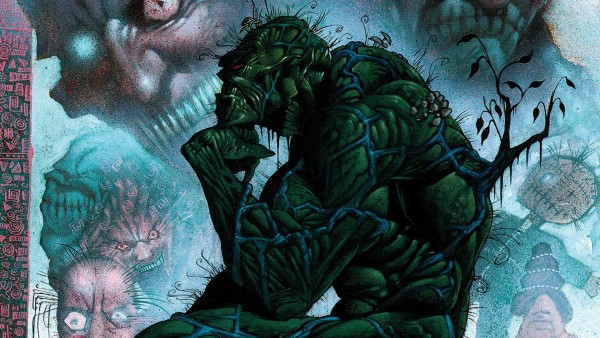
Publisher: DC Comics/Vertigo Writer: Grant Morrison and Mark Millar Art: Phil Hester and Kim DeMulder Coloring: Tajana Wood Lettering: Richard Starkings Cover/Back Art: John Mueller Release Dates: August 2015 Review – Swamp Thing: The Root of All Evil With origins in the 1970s and seeing some small amount of popularity through the 80s, the Swamp Thing series found some of its more solid footing in the early 90s with a four issue arc penned by Grant Morrison, fresh off of Arkham Asylum, and a then young up and comer known as Mark Millar, who would of course go on to write seminal works of his own like The Ultimates, Superman: Red Son, and of course Marvel’s Civil War. Morrison worked with Millar to author those four opening issues, and following that, Millar would continue to write for the remainder of that volume by himself. Today we’ll review Swamp Thing: The Root of All Evil and see if Morrison and Millar’s writing capture the essence of the not so jolly green giant, or if it’s dead on the branch. If you’re at all familiar with the various works of Grant Morrison, you know well enough to expect a story that aims to bend your mind and demands to be revisited and poured over once or twice to really absorb everything that is being laid down in front of you. Swamp Thing: The Root of all Evil’s writing displays all the typical hallmarks of a Grant Morrison tale; weaving in flowery symbolism and esoteric references to ancient gods, shamanic rituals, and the philosophies and theories of psychedelic scholars like Terrance McKenna that might have you feeling a bit like keeping a notepad nearby to keep track of it. The story also features some enjoyably deep cuts from other cosmic corners of the DC universe such as appearances (albeit brief) by Dr. Fate, The Phantom Stranger, and a couple of other familiar faces that solidly ground the tale in the greater DC Universe. Review- Earth-One: Wonder Woman Vol 3 The Root of All Evil almost functions as something of a soft reboot for the character, re-contextualizing Alec Holland’s earlier adventures as the Swamp Thing as some sort of long hallucinogenic trip that leaves Holland, very much looking like a regular man, waking from his dream in the jungles of South America. The pages wear Morrison’s kaleidoscopic style on its sleeve, and even once Millar takes up the pen in full in the back half of the book that feeling of eccentric dread never quite lets up or lets go, though Millar’s writing does noticeably lack the same psychedelic influences that weaved their way through the first half of the story. That said, despite some stylistic differences, Morrison and Millar both craft a poetic, compelling, and oftentimes downright chilling narrative from start to finish. This macabre tale of fate the descent into the mystical unknown is brought to life by the art of Phil Hester (Green Arrow: Quiver and most recently announced as the newest artist on DC’s Superman as of December 2020) with Kim DeMulder filling Hester’s pencils in with inky blacks and deep shadows that hide dark things. The whole spread is colored by Tatjana Wood, who casts the most disturbing elements of the book in a sickening pallor, but also makes room for bright floral greens and reds in the scenes where Swamp Thing exercises his full powers. The art, at first, did take some getting used to, especially if you are accustomed to the more cinematic art styles of later 21st century comics, but it becomes clear before long that the aesthetic presented is perfectly suited for the unflinching horror elements of the book. And they are unflinching. It can’t be stated emphatically enough that this is a book for mature readers, with enough gore, nudity, and overall grotesque imagery to give your deepest nightmares some wonderfully terrifying ideas. All in all, it’s hard not to recommend Swamp Thing: The Root of All Evil upon review, especially since the story as a whole was never collected in trade paperback until very recently (2015), and so may have been missed out on by a lot of readers. However, that recommendation does come with a word of caution: The story can occasionally be confusing, though it is mostly explained by the end, and the imagery does not hold back or pull any punches, joyfully presenting you scene after scene of gothic horror. However, if you’re in the mood for an unsettling, gripping ride, and willing to accept a bit of confusion at the outset of the volume, then this comes highly recommended. Or, if you’ve ever wondered just what that whole Swamp Thing is about and are thinking of taking the plunge, this is as good a place as any to start. Review- JLA- Earth 2 A Tale of Dark Reflections

Review – Swamp Thing: The Root of All Evil Read More »

Scroll to Top