Scarlet Witch

Review – Scarlet Witch Vol 1: Witches’ Road

Review – Scarlet Witch Vol 1: Witches’ Road Publisher: Marvel Writer: James Robinson Art: Vanesa Del Rey, Marco Rudy, Steve Dillon, Chris Visions, Javier Pulido, Jordie Bellaire, Frank Martin, Vero Gandini, and Muntsa Vicente Release Dates: 2015 – 2017 Scarlet Witch has taken the world by storm these last few weeks thanks to WandaVision. Fans of her literary and live action appearances are very aware that daughter of Magneto is not perfect. She is one of the most powerful beings in the Marvel Universe. She can rewrite reality with a single thought; however, she cannot control everything or everyone around her. Wanda Maximoff has committed unspeakable acts that changed the world forever. She carries guilt for those acts to this day, but must push it aside to face a looming threat. Enter the Scarlet Witch. Story Scarlet Witch Vol:1 Witches’ Road follows Wanda Maximoff’s return to fighting evil. But instead of facing purple-skinned tyrants and her technical father-in-law Ultron, she faces a silent threat. A “broken” magic is surrounding the world. Dark forces are forming at work, and old villains vie to become our hero’s new rival. The world may not want the Scarlet Witch, but she is the best they got. The five issues together follow Wanda’s trek to confront the witchcraft that permeates the globe. However, each issue can be treated as a stand-alone story as each issue puts Wanda to a completely different location and in touch with completely different people. This is what makes Scarlet Witch Vol: 1’s such a fantastic read; James Robinson gives his readers a story wherein Wanda is constantly confronting herself and the forces working against her. But by approaching the story as a loosely tethered anthology of short stories, Robinson adequately toes the line between lore-building and having fun with Wanda’s character by placing her in ever-changing circumstances. This philosophy of giving readers short stories with a beginning, middle, and end is descriptive of Scarlet Witch Vol: 1 as a whole. Previous knowledge of the Scarlet is not required. The story provides you everything you need from the get-go, and it is not a lot: Wanda Maximoff is Scarlet Witch; she has a disembodied mentor called Agatha Harkness; Wanda is living with the sins of her past and she is ready to atone for them. Readers who find their way to the end of the volume are invited to continue journeying with Wanda into Volume 2, yet Robinson’s cohesive storytelling also allows readers to stop their journey at the final page, satisfied with what they read. Art The absolute best thing about Scarlet Witch Vol: 1 is the art. Every issue contains a different illustrator’s art. Each artist uses light, shadow, color, dimension, shapes, and even panels differently. However, none are bad; in fact, it is very difficult to pick out which is best as this will depend on the reader’s preferences. This shotgun approach of having different illustrators illustrate their own issue of a 5-issue arc serves two accomplishments: 1) First, it resonates with Robinson’s loose-anthology approach to Scarlet Witch Volume: 1 in that each issue can be treated as its own short story. 2) Second, it gives readers of different artistic preferences something to like. If a reader did not like the overuse of darkness in issue #1, that’s fine because more than likely that reader will like the bright colors of issue #5. Everyone will like something. While this shotgun approach is risky for sacrificing artistic consistency, I believe the risk was well worth it as each illustrator is no doubt talented in their given style. Scarlet Witch Volume: 1 Witches’ Road is a cohesive, fun story comprised of smaller cohesive, fun stories. Scarlet Witch fans will watch Wanda grow beyond the sins of her past. New fans who only know Wanda from the MCU will be treated to a fun time and may come to respect her comic book counterpart. Come for the Scarlet Witch; stay for the eye-catching artwork. If you enjoyed our Review of Scarlet Witch Vol 1: Witches’ Road then leave a comment or rating below. Join us on Discord, Twitter, Instagram etc – linktr.ee/BGCPComicCon [yasr_multiset setid=1] [yasr_visitor_multiset setid=1] Buy tickets for BGCP Comic Con in and around Glasgow Scotland – BUY TICKETS Check out all of our Comic, Movie, Television and Videogame Reviews HERE and our Podcasts/Interviews HERE
Review – Scarlet Witch Vol 1: Witches’ Road Read More »

Tom King's Vision

Tom King’s Vision Review: Best Marvel Comic of the Decade?

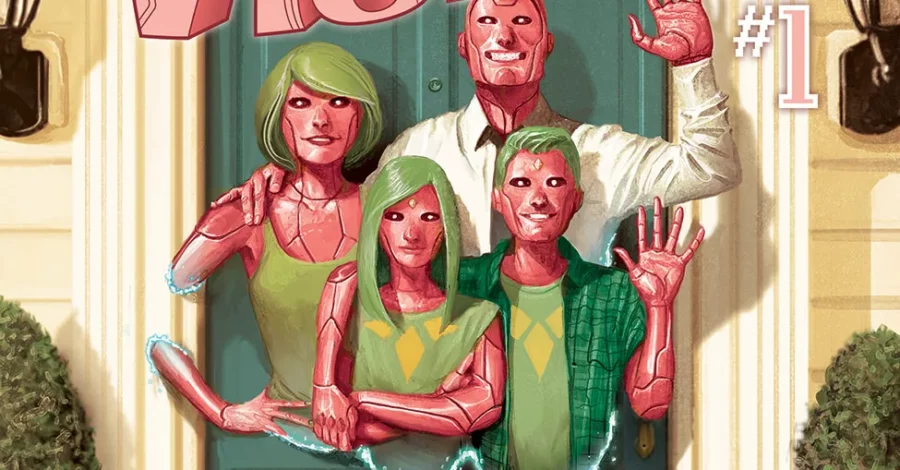
Review: Tom King’s Vision – A Masterpiece of Synthetic Horror Tom King doesn’t just write superhero stories; he writes existential crises. In The Vision, King and artist Gabriel Walta take a character known for being a stoic Avenger and turn him into the lead of a suburban nightmare. If you loved the reality-warping tension of WandaVision or are looking forward to the upcoming Vision Quest series, this comic is the essential blueprint This character was once obscure. Now, he is a household name thanks to the MCU and WandaVision. King’s series explores heavy topics across twelve complex issues. It asks what it truly means to be human. It also examines how we handle family trauma. The Vision Builds a Nuclear Family The premise of this story is simple yet chilling. Vision wants to understand humanity. He also wants to distance himself from his “father,” Ultron. To do this, Vision builds his own family. He creates a wife, Virginia, and two teenage children, Vin and Viv. They live in a house with a white picket fence in Virginia. Vision even takes a job as the Avengers liaison to the White House. He tries to live a normal, suburban life. Every night, the family sits at the dinner table. They do not eat food. Instead, they beam recorded experiences of their day to each other. This attempt at a “normal” life feels intentional and uncomfortable. It is a robotic approximation of human happiness. Trauma and the Catalyst for Chaos Very quickly, a dark event sends their lives spiraling out of control. Tom King uses this catalyst to explore the humanity of these artificial beings. He effectively portrays PTSD in life forms that barely understand feelings. The children begin to change. Vin develops obsessive traits and acts out passages of Shakespeare. Virginia begins repeating words and tells lies to protect her family. These quirks create a fantastic contrast to their robotic behavior. King’s greatest strength is his dialogue. He makes the family seem both cold and logical, yet deeply loving. You will find yourself rooting for the Visions even as they become horrifying. Defining Humanity Through Artificial Life Does a person need flesh and blood to be human? Does a soul require a biological heart? King does not provide easy answers. However, he shows that the Visions are one of the most human families in comics. Virginia lies to protect her children like any human mother. Viv develops a crush on a local boy. She replays the memory of their conversation over and over. She feels things she cannot fully name. The style echoes King’s later work on Mister Miracle. He places boring family life right next to life-or-death superhero drama. If you enjoyed that book, you will love this one. You will feel for this family, but you will also learn to fear them. The Visual Style of Gabriel Walta Gabriel Walta’s artwork is the perfect match for this drama. His panels are big, clear, and very colorful. He makes these robotic characters incredibly emotive. Their facial expressions and body language clearly show the high stakes of the story. The coloring by Jordie Bellaire is equally impressive. The hues are warm during everyday scenes. They switch to cold, desolate tones when the story turns morbid. This shift highlights the loneliness growing within the characters. Michael Walsh takes over the art for issue seven. While a change in artists can be jarring, it works here. This issue is a flashback to Vision’s time with Wanda. The sketchy, cartoon style fits the look of an earlier era. NEW AVENGERS BREAKOUT REVIEW Our Final Verdict on Tom King’s Vision This is a dense book with layers of meaning. You might need to read it twice to catch everything. The story is both sad and hopeful. It is also terrifying. You should definitely read this book. This is especially true if you are a fan of the MCU version. This Vision is more robotic and less empathetic than the movies. However, you will see exactly where the film inspiration started. We give this series full marks. It deserves a spot on every comic fan’s bookshelf. BGCP SUGGESTS: The Vision Collector’s Guide If our review has you ready to enter the suburbs of Arlington, Virginia, here are the best ways to experience this masterpiece and the stories that inspired it. 1. The Definitive Edition: Vision: The Complete Collection 👉 Buy Vision: The Complete Collection on Amazon Why it’s a must-own: This collects all 12 issues of the Eisner Award-winning run. It’s the perfect “one-and-done” graphic novel for your shelf. 2. For the Hardcore Collector: The Visions (Marvel Premier Collection) 👉 Pre-order The Visions Premier Edition on Amazon Why it’s a must-own: Releasing in June 2026, this high-end oversized format features bonus sketches and behind-the-scenes notes from Tom King and Gabriel Walta. 3. The Retro Inspiration: Vision & The Scarlet Witch – The Saga of Wanda and Vision 👉 Buy The Saga of Wanda and Vision on Amazon Why it’s a must-own: See the 1980s “suburban” roots that Tom King subverted. This collection features their wedding and the birth of Billy and Tommy. 4. The Spiritual Successor: Mister Miracle by Tom King 👉 Buy Mister Miracle Deluxe Edition on Amazon Why it’s a must-own: If you loved the trauma-focused writing in The Vision, King’s work on Mister Miracle is the perfect follow-up.

Tom King’s Vision Review: Best Marvel Comic of the Decade? Read More »

Review – House Of M

Review: House of M (Marvel Comics) – The Day Mutants Died

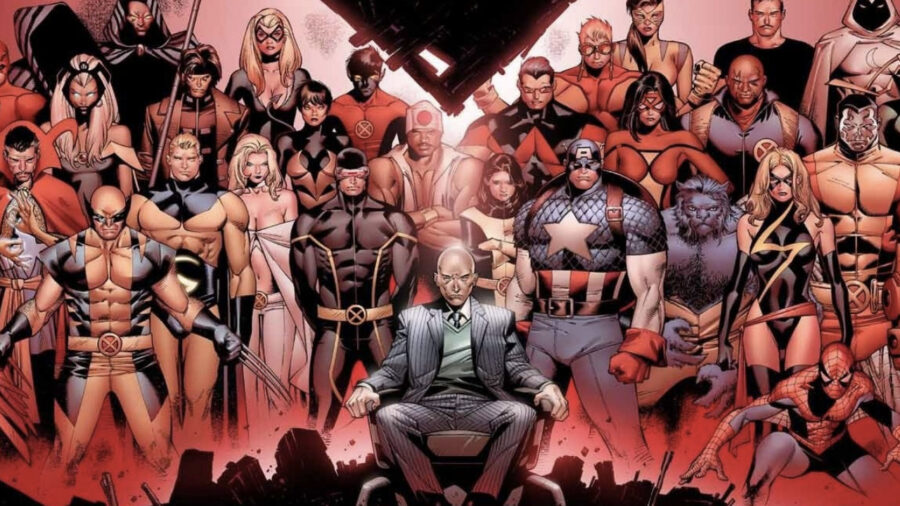
Review: House of M – A World Without Heroes? Publisher: Marvel Comics Writer: Brian Michael Bendis Artist: Olivier Coipel Release Date: June – November 2005 House of M asks a dangerous question. If you could have your heart’s desire, would you take it? Even if it meant living a lie? In this massive 2005 crossover, Brian Michael Bendis explores this existential dilemma. Following the chaos of Avengers: Disassembled, the Avengers and X-Men must decide the fate of the Scarlet Witch. Her breakdown threatens reality itself. But before they can act, the world changes. A Perfect World? The story drops us into an alternate reality. Mutants are the dominant species. Humans are the minority. Everyone has what they always wanted. Peter Parker is a celebrity married to Gwen Stacy. Wolverine is a high-ranking SHIELD agent. Magneto rules the world. Bendis handles this setup brilliantly. He uses the medium to make the reader question their own desires. Would you accept a fake paradise to escape real pain? This concept is fascinating. We see a world where Magneto has won. Yet, in the early panels, he shows striking regret. He repents for dragging his children into his war. This adds depth to a villain who is usually unwavering. Wanda’s Mental State The emotional core of this book is Wanda Maximoff. The slow build-up of her anguish is heartbreaking. She carries the baggage of losing her children and her husband, Vision. Bendis presents these ideas much better here than in Avengers: Disassembled. The execution is less heavy-handed. The narrative flows naturally toward the inevitable conclusion. We know where it is going, but that knowledge makes the journey more somber. The heroes work hard to fix reality, unaware that they are racing toward a tragedy. The Art of Reality Olivier Coipel’s art is a highlight. His pencils capture a phenomenal level of detail. In a story filled with grief, facial expressions matter. Coipel delivers. I also appreciated the costume design. In this alternate universe, the heroes wear different outfits. The attention to detail in these new designs is impressive. It makes the “House of M” world feel lived-in and distinct from the regular Marvel Universe (Earth-616). However, there is one small issue. The cover art often displays costumes that don’t match the interior panels. This is a common issue in comics, but it is distracting here. For a major event from a company like Marvel, you expect better consistency. Why It Matters This story changed everything. It ends with three simple words: “No More Mutants.” This single moment decimated the mutant population. It changed the dynamic of X-Men comics for nearly a decade. Revisiting it now, the stakes feel just as high. It is also fascinating to view this through the lens of the MCU. With WandaVision and Doctor Strange in the Multiverse of Madness, we see live-action adaptations tackling similar themes of grief and reality warping. Final Verdict I am glad I revisited House of M. It remains one of Brian Michael Bendis’ best works. The artwork complements the story perfectly. The themes of PTSD and trauma add weight to the superhero action. There is a reason fans remember this book so fondly. It is arguably one of Marvel’s best crossover events. If you want to understand the modern history of the X-Men, you must read this book. Score: 5/5 More Reviews from BGCP Review: Avengers Disassembled Review: Watchmen

Review: House of M (Marvel Comics) – The Day Mutants Died Read More »

Review – Avengers: Disassembled

Avengers Disassembled Review: How It Changed Marvel Forever

Review: Avengers Disassembled – The Day the Heroes Fell Publisher: Marvel Comics Writer: Brian Michael Bendis Penciller: David Finch Release Date: August 2004 – January 2005 Avengers Disassembled is infamous. Written by Brian Michael Bendis in 2004, this story arc ended the classic Avengers era. It also paved the way for the modern “New Avengers” line up. The story remains controversial. Bendis treats fan-favourite characters with brutal indifference. At the time, this caused an uproar. The repercussions shook the entire Marvel Universe. But does it hold up today? A Controversial Classic I missed this arc when it first dropped in 2004. I finally read the trade paperback ten years later. Perhaps that delay helped me enjoy it more. Fans took the destruction of their heroes personally at the time. With the benefit of hindsight, we can view it through a historical lens. We know where the characters end up. However, the book is far from perfect. I generally enjoy Brian Michael Bendis’ work. I appreciate his goal here. He wanted to strip down a bloated history. He wanted to clear the crowded roster. This allows characters to have fresh starts. It is similar to DC’s Crisis on Infinite Earths, but on a smaller scale. Unfortunately, the execution feels heavy-handed. The intention is rarely subtle. Chaos Erupts I am glad I read the collected edition. If I had waited week-to-week for single issues, I might have quit. The first few chapters offer inexplicable chaos. There is no clear explanation for the madness. However, the main title is “Chaos.” You certainly can’t accuse Marvel of false advertising. Seeing the team thrown into total disarray is fascinating. The Avengers are usually in control. They protect Earth’s citizens with confidence. Seeing them lose that control so quickly is a shock to both the characters and the reader. The problem is the pacing. Crazy events play out consecutively. There is no time to breathe. We never see the heroes process the gravity of their situation. Major characters die, yet the story breezes past them for the next big shock. This makes some of the boldest story beats feel hollow. Not for Beginners A quick word of advice: Do not start here. If you are new to Marvel comics, this is a terrible entry point. I know Marvel’s convoluted continuity well. Even I struggled to follow certain sections of this story. You need a firm grasp of pre-2004 Avengers history to truly understand the impact. The Art: Dark and Gritty I have mixed feelings about the artwork. David Finch’s pencils capture the grand scale of the story brilliantly. He shows the magnitude of destruction perfectly. However, the intimate moments suffer. The way Finch draws faces often feels out of place. It takes away from the emotional gravity of the situation. Frank D’Armata’s colors don’t always help. His style is bright and bold. I think certain scenes needed a muted palette. The garish colours clash with the darker story beats. Issues with Age Revisiting this book in the modern era reveals some flaws. Specifically, the costumes haven’t aged well. This is especially true for the female characters. We have seen shows like The Boys parody the “closet lasciviousness” of comic art. In that light, the impractical leather and spandex designs stick out like a sore thumb. The Highlight The artistic highlight comes in the finale. The surviving Avengers gather to reminisce. We get a beautiful series of two-page spreads. These show a highlight reel of the Avengers’ greatest moments. Different artists draw each flashback. We see Captain America’s revival. We see Wanda and Vision’s wedding. This savvy decision recaptures classic moments for a modern audience. It allows each artist to put their own spin on history. Final Verdict I have given Bendis’ writing a bit of a bashing in this review. Despite that, I still enjoy this book. I can’t fault the unflinching boldness of the writing. It is refreshing to see our favorite heroes out of their depth. This story had to happen. It set up the massive success of New Avengers and House of M. I understand the fan backlash. But I appreciate the guts it took to publish this. If you know your history and want to see the Avengers break, you will enjoy Avengers Disassembled. Score: 4/5

Avengers Disassembled Review: How It Changed Marvel Forever Read More »

Scroll to Top