Videogames

BGCP Podcasts and Comic Con


BGCP Comic Con was started as The Big Glasgow Comic Page back in July 2012 mostly out of boredom and trying to find more Comic Fans to speak to, The Scottish Facebook Page gathered likes extremely fast as there wasn’t anything like it at the time and eventually this led to a Comic Book Group, Pub Quizzes, Tournaments and eventually a Comic Book Market  based soley in Glasgow.  We organized BGCP Comic Markets for several years until we had outgrown the smaller venues in Glasgow City Centre so set out to run Comic Cons in and out of Glasgow and further over Scotland including East Kilbride, Rutherglen, Loch Lomond, Dunoon, Aberdeen, Bathgate, Edinburgh, Glenrothes, Kirkcaldy and countless more towns and cities. 

BGCP Comic Con is a series of Scottish Conventions that happen in and around Glasgow, Fife and Aberdeen. BGCP also publish articles, reviews and news.

Previous Convention Guests have included Frank Quitely, Al Ewing, Alan Grant, Gary Erskine, Monty Nero, Yishan Li, David Baillie, Grant Perkins, David Bishop, John Lees, Jim Stewart, Tom Foster and Neil Slorance

We cover Comic Books News, Articles and Reviews from Marvel Comics, DC Comics, Image Comics, IDW Publishing, BOOM Studios, Dark Horse Comics and many more. We also provide the same for movies, television and video games.

Here are some of the main companies and characters that BGCP covers – Marvel Comics, DC Comics, Image Comics, IDW Publishing, Dark Horse Comics, Dynamite, BOOM Studios, 2000AD, Titan Comics, Legendary Comics, Millarworld, Aftershock Comics,Valiant Comics.

BGCP Podcasts

BGCP launched the BGCP:Disassembled Podcast in February 2021 and release weekly episodes featuring the latest comic book news and reviews, we also run weekly interviews and have also featured many writers and writers from Marvel, DC, Image and more.
Diablo 4 Lord of Hatred Review: Don't Ignore the Warlock

Diablo 4 Lord of Hatred Review: Don’t Ignore the Warlock

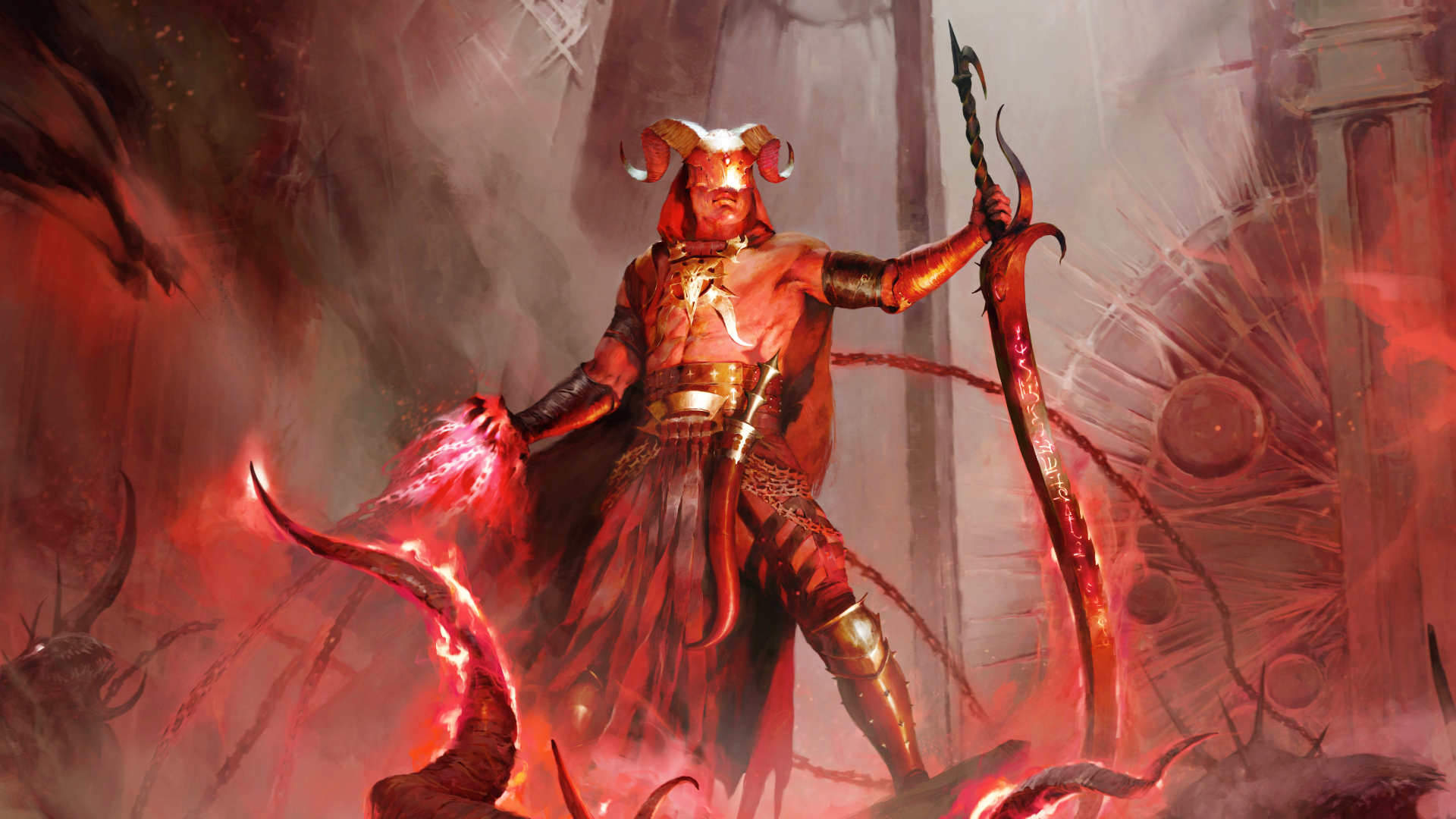
The Diablo 4 Lord of Hatred expansion has officially launched, bringing the dark “Age of Hatred” saga to a climax. With the return of Mephisto, a new level cap of 70, and the long-awaited arrival of the Paladin and Warlock (Demonologist) classes, there is a lot for Sanctuary fans to unpack. In this review, we’ll dive into the pros and cons of the DLC and determine which new class reigns supreme in the 2026 meta. Diablo 4 Lord of Hatred Review: Pros and Cons Before jumping into the builds, let’s look at the state of the game following the April 28 release. The Pros The Cons Paladin vs. Warlock: Which Class Should You Choose? The biggest question for any player starting the Lord of Hatred DLC is which new class to main. Both offer vastly different playstyles. The Paladin: The Ultimate Tanky Vanguard The Diablo 4 Paladin is exactly what fans have been asking for since launch. Using Faith as a resource, this class excels at “smashing and surviving.” The Warlock: The Master of Demonology The Warlock (Demonologist) is a high-skill, high-reward caster that manages Wrath and Dominance. Unlike the Necromancer, your demons are aggressive and require active commands. Final Verdict: Who is the Best Class in Lord of Hatred? For most players in the UK Diablo community, the Paladin is the winner for general gameplay and ease of use. However, if you are looking to top the leaderboards in Echoing Hatred, the Warlock’s damage ceiling is currently unmatched. Price Check: The expansion is currently retailing for £34.99 on the Battle.net and Xbox stores. Diablo 4 vs Path of Exile 2 Gear Up for Sanctuary: Essential Diablo IV Deals If you are jumping into the Diablo 4 Lord of Hatred expansion, having the right gear and lore knowledge is essential. Check out these top picks and deals available now on Amazon UK:The Ultimate Lilith Collection

Diablo 4 Lord of Hatred Review: Don’t Ignore the Warlock Read More »

Best Video Game Stores & Arcades in Scotland: The 2025 Essential Guide

The Ultimate Guide to 7 Epic Scotland Game Stores & Arcades

Top Independent Video Game Stores (Buy & Trade) Forgotten Worlds (Stewarton, Ayrshire) Backtracks Retro Games (Edinburgh) Video Games Aberdeen (Aberdeen) Best Gaming Arcades & Social Play (Play & Socialize) Level X (Glasgow & Edinburgh) NQ64 (Glasgow & Edinburgh) R-CADE (Glasgow) Game Zone at M&D’s (Motherwell) Protect the Rare Finds: ? [Acrylic Protector Cases for SNES/N64 Cartridges] The Modern Retro Fix: ? [8BitDo Ultimate Wireless Controller] The Home Arcade Fix: ? [My Arcade Pac-Man Micro Player]

The Ultimate Guide to 7 Epic Scotland Game Stores & Arcades Read More »

Top 10 Safest iPad Games for Kids (2025): No Ads, No In-App Purchases, and Parent-Approved

The Ultimate Safest iPad Games for Kids (2025) Guide

The Top 10 Safest iPad Games of 2025 Game Best For Why It’s Safe 1. Khan Academy Kids Ages 2–8 100% free with zero ads or in-app purchases. Built by educators. 2. Pok Pok Montessori Ages 2–7 No winning/losing or addictive “streak” mechanics. Just digital toys. 3. Sago Mini World Ages 2–5 Subscription-based (no individual buy-ins) and works entirely offline. 4. Endless Alphabet Early Readers Self-contained app; no social features or outside links for kids to click. 5. PBS KIDS Games Ages 3–8 Publicly funded and strictly non-commercial. No data tracking. 6. Toca Kitchen 2 Creative Play No third-party ads and no “energy bars” that force kids to keep playing. 7. LEGO DUPLO World Toddlers Certified by the KidSAFE Seal Program. Focused on simple building. 8. Thinkrolls: Space Logic/STEM No internet connection required. High-quality logic puzzles without stress. 9. Minecraft Education Ages 7+ Safer than the standard version; includes structured, supervised lessons. 10. Duolingo ABC Literacy Ad-free and designed specifically to protect child data while teaching reading. The “Safety First” Review: What to Look For In 2025, the gold standard for safety is “The Airplane Mode Test.” If a game can be played entirely in Airplane Mode, it is inherently safer because it cannot serve ads, track data, or allow strangers to contact your child through chat. The Best “Safe” Tablet: ? [iPad (10th Gen) 64GB with Apple Pencil Support] The Essential Protection: ? [ProCase Kids Case for iPad (Shockproof with Handle)] The Controlled Access: ? [Apple Gift Card (For App Store Subscriptions)] Screen Health: ? [Blue Light Blocking Screen Protector for iPad]

The Ultimate Safest iPad Games for Kids (2025) Guide Read More »

Is Roblox Safe for Kids

The Ultimate Is Roblox Safe for Kids (2026) Guide

Essential Safety Checklist for 2025 Feature What Parents Need to Do Parental Account Linking New in 2025: You can now link your own “Parent Account” to your child’s. This allows you to manage settings from your phone without logging into theirs. Content Maturity Labels Set the “Maturity Slider.” Categories are now: Minimal, Mild, Moderate, and Restricted (17+). We recommend Minimal for children under 9. Communication Settings By default, 2025 updates restrict chat for under-13s. Ensure “Experience Chat” is set to Friends Only or No One to prevent stranger contact. Spending Limits Use the “Monthly Spend Limit” tool. Roblox now sends notifications for transactions over a certain threshold (e.g., $10 or $25). Screen Time Management Set a hard daily limit (e.g., 60 minutes). The app will automatically “time out” once the limit is reached. The 3 Biggest Risks in 2025 (And How to Fix Them) Recommended Games for Kids Under 10 (2025 Edition) These games currently hold “Minimal” or “All Ages” labels and focus on creativity rather than social hangouts: Amazon Affiliate Links (2025 Parent Survival Kit)

The Ultimate Is Roblox Safe for Kids (2026) Guide Read More »

From Pocket Monsters to Global Assets: Why Pokémon is More Popular Now Than in the 90s

From Pocket Monsters to Global Assets: Why Pokémon is More Popular Now Than in the 90s

Thirty years ago, Pokémon was a quirky experiment on a dying handheld console. Today, it is the highest-grossing media franchise in history. But its journey hasn’t been a straight line. In 2016, a single mobile app shifted the brand’s trajectory forever, and by 2025, that momentum has bled into a physical card market where “chase cards” are treated with the same reverence as fine art. Pokémon isn’t just a game anymore; it’s a cross-generational language of community and commerce. The “GO” Effect: How Niantic Resurrected a Giant When Pokémon GO launched in 2016, it didn’t just break the App Store; it brought a dormant fan base back into the light. The Great TCG Resurgence: Cardboard as Currency If Pokémon GO provided the visibility, the Trading Card Game (TCG) provided the value. In 2025, card collecting is at an all-time high, driven by a perfect storm of factors: The Modern Hit: ? [Pokémon TCG: Prismatic Evolutions Elite Trainer Box] The Digital-to-Physical Bridge: ? [Pokémon TCG: My First Battle Starter Set] The Collector’s Essential: ? [Ultimate Guard 12-Pocket QuadRow Portfolio] The “GO” Companion: ? [Pokémon GO Plus + Accessory]

From Pocket Monsters to Global Assets: Why Pokémon is More Popular Now Than in the 90s Read More »

Call of Duty: Black Ops 7 Review: Masterful Multiplayer vs. A Disastrous Campaign

Black Ops 7 Review: Masterful or Disastrous?

The Mixed Review: A Tale of Three Modes The Good: Multiplayer & Zombies Shine Critics from IGN and The Guardian agree: if you are here for the “sweat,” Black Ops 7 delivers. The Bad: The “Warzone-ified” Campaign This is where the game loses its footing, especially for the UK’s massive single-player audience. In a controversial move, the campaign is Online-Only and designed primarily for 4-player co-op. The Verdict: Black Ops 7 is a maximalist package that feels like a “Warzone expansion” disguised as a £70 premium title. If you live for the camo grind and high-octane Zombies, it’s a hoot. If you’re a single-player fan looking for a cinematic story, you might want to wait for a deep sale on the PlayStation Store or Xbox Marketplace. The Best Way to Play: ? [Call of Duty: Black Ops 7 – Cross-Gen Bundle] The Competitive Edge: ? [Xbox Elite Series 2 Controller / PS5 DualSense Edge] The Audio Advantage: ? [SteelSeries Arctis Nova 7 Wireless Headset] Protect Your Console: ? [Internal SSD Expansion for PS5/Xbox (2TB)]

Black Ops 7 Review: Masterful or Disastrous? Read More »

The Secret History of Pokémon Gen 1: 10 Facts Even Hardcore Fans Don't Know

The Secret History of Pokémon Gen 1: Ultimate Guide

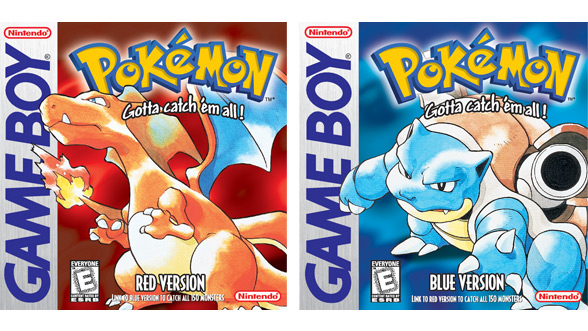
Long before the Nintendo Switch, the open worlds of Paldea, or the global phenomenon of Pokémon GO, there was a small, struggling team of developers at Game Freak with a wild idea: what if children could trade insects through a wire? In late 2025, as the franchise celebrates nearly three decades of dominance, the story of its beginning feels like a digital fairy tale. It started with a childhood obsession. Satoshi Tajiri, a boy nicknamed “Dr. Bug,” watched as the ponds and forests of his youth were paved over by Japan’s urban expansion. He wanted to give the next generation a way to experience the thrill of the hunt—the magic of finding something rare in the grass—even in a world of concrete. Alongside artist Ken Sugimori and composer Junichi Masuda, Tajiri spent six grueling years crafting a world inside a tiny grey cartridge. The journey from the Japanese launch of Pocket Monsters: Red and Green to the global craze of Pokémon Yellow was anything but certain. The games were buggy, the Game Boy hardware was aging, and the concept of “collectible monsters” was entirely untested. Yet, against all odds, the Kanto region became a second home for millions. Whether you’re a veteran trainer looking to revisit the glitches of Cinnabar Island or a newcomer curious about the “Mew miracle,” this is the story of how 151 monsters and four primary colors sparked a revolution. Let’s head back to Pallet Town and explore the games that started it all. 10 Deep Secrets of the Kanto Era The Visual Bible: ? [Pokémon Adventures: Red & Blue Box Set] The Cards: ? [Pokémon TCG: Kanto Friends Mini Tin 5-Pack Bundle] Retro Protection: ? [Game Boy Cartridge Protective Cases (10-Pack)]

The Secret History of Pokémon Gen 1: Ultimate Guide Read More »

Creator Interview - Gordon Rennie

Gordon Rennie Interview: Writing for Judge Dredd & Star Wars

INTRODUCTION: A Scottish Creative Powerhouse Hey folks! Welcome to another BGCP creator interview. We are lucky enough to be chatting today with Gordon Rennie. Gordon Rennie is an incredibly talented writer from Scotland. He has worked in the comic book and videogame industries for the last 30 years. His impressive credits include: You can find multiple other cool titles of his over on Amazon. Let’s dive into the interview! INTERVIEW: The Early Days of a Pro Writer BGCP: Hi Gordon, thank you for speaking with us. Would you mind starting with your background and career? Gordon Rennie: My education? I got a useless arts degree from a Scottish redbrick university in the late 80s. It guaranteed to get me nowhere at the time. I started doing interviews and reviews for the UK comics press. Back then, they paid actual money for that. Most frustrated writers end up doing that. Warren Ellis started out at the same time for the same people. One magazine was Speakeasy. It morphed into Blast comic during the early 90s surge of ‘mature’ comics like Crisis and Revolver. I pitched some comic strip ideas to the editor. He bought just about everything I offered him. That was it. I was a professional comics writer. It seemed much easier in those days. BGCP: You began your career with Sewer Patrol in 1991. How did that first gig come about? What did you learn from it? Gordon Rennie: It was the first thing in print, but not the first professional thing I wrote. By then, I had written the first chapters of White Trash and Sherlock Holmes. Both appeared in the last issue of Blast before Tundra picked them up. Trust me, those were much better stories than Sewer Patrol. That was just a dumb and disposable Future Shock thing. However, Sewer Patrol taught me one notable lesson: I didn’t get paid. The people in charge sent me three post-dated cheques. All of them bounced. I learned early on not to work for spivs. SUCCESS AT 2000 AD: The Birth of Missionary Man BGCP: A few years later, you scored a gig writing for 2000 AD with Missionary Man. How did that happen? Gordon Rennie: Well, it was the Judge Dredd Megazine, not 2000 AD. At that time, I was still blacklisted from 2000 AD. I had written too many mean reviews of it. I sometimes think editor David Bishop hired me mainly to spite his colleagues. I pitched David a few things. He rejected most in his famously blunt style. However, he liked Missionary Man. It was an apocalyptic western set in the Cursed Earth. My main stroke of luck was David giving it to Frank Quitely. It was his first mainstream work. Those first stories aren’t very good, but they keep getting reprinted due to Quitely’s artwork. BGCP: You worked with 2000 AD for many years. How was your experience with them as a company? Gordon Rennie: Great. They pay regularly and on time. After my early experience with bounced cheques, that is the main thing. I get to do fun stories in the comic I grew up reading. We still laugh about the time they told me I’d never work for Tharg. WORKING WITH LEGENDARY IPs: Star Wars and Warhammer BGCP: You have written for many licensed properties. How does that affect your creative control? Gordon Rennie: It depends on the IP and the holder. Some holders just want the license money. They don’t care what you do. Others have very definite ideas on what you can and can’t do. Games Workshop is possessive with Warhammer. However, Lucasfilm is the most ferocious. I worked on a Star Wars game. Lucasfilm looked at everything I was doing. They liked my work, though. They even told the developer to bring me back for extra dialogue work. BGCP: Do you have a favorite IP that you enjoyed working with the most? Gordon Rennie: Judge Dredd, Doctor Who, and Star Wars. They were the holy trinity of my youth. Trust me, you haven’t lived until you see your name scroll up the screen on a Star Wars project with John Williams’ music playing. TRANSITIONING TO VIDEOGAMES: Killzone and Beyond BGCP: You wrote the script for the first Killzone game. What is your background with gaming? Gordon Rennie: I had been playing games since the Sega Mega-Drive days. I knew the tropes well. However, the jump to making them is a big one. It was a real eye-opener to see the complex business of making a game. My favorites are Tomb Raider and GTA. Generally, I like games where you blow stuff up. BGCP: Why did you move into videogames? Gordon Rennie: The Killzone guys came looking for me. They were fans of my Rogue Trooper work. Basically, I got an email asking me to come to Amsterdam for a meeting. The Killzone project finished without me. It was the first game I worked on and the first I was fired from. But it taught me how to make a game. Gaming paid much better than comics. I’ve worked on about 40 games over the last twenty years. I’ve done everything from laying down the basic story to polishing dialogue on Korean RPGs. DEVELOPMENT CHALLENGES: The Good, The Okay, and The Ugly BGCP: How does someone land a gig for a Sony exclusive IP? Gordon Rennie: I got my first games work because of my comic experience. These days, dedicated games writers begin directly in the industry. I’m afraid I have no idea how they do that now. BGCP: Does the story change based on the script, or are aspects already established? Gordon Rennie: It varies. In the early days, writers were an afterthought. Designers built the game and then brought in a writer to make sense of it. It was like putting up wallpaper after the house was built. Thankfully, that is rare now. Developers want writers early for world-building and plot ideas. BGCP: You also wrote for

Gordon Rennie Interview: Writing for Judge Dredd & Star Wars Read More »

Scroll to Top