
Review – Save Yourself #1
Review – Save Yourself #1. When Gigi witnesses the Lovely Trio battling a monster first-hand, she sees something that causes her to question everything
Review – Save Yourself #1. When Gigi witnesses the Lovely Trio battling a monster first-hand, she sees something that causes her to question everything
DC Horror Presents – The Conjuring – The Lover #1. The terrifying debut of the tie-in to The Conjuring: The Devil Made Me Do It begins here
Review – DC Horror Presents – The Conjuring – The Lover #1 Read More »
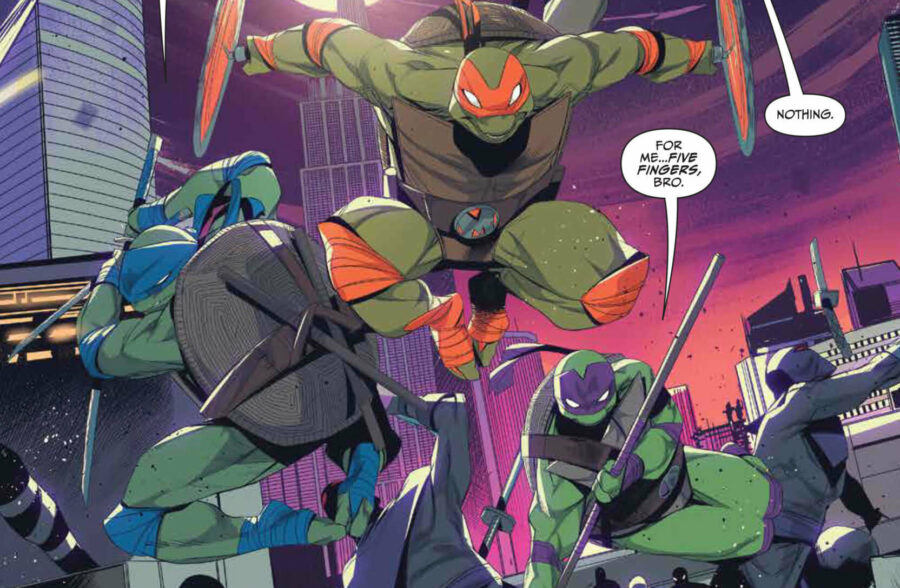
Review: Mighty Morphin Power Rangers/TMNT – The Ultimate Crossover Imagine this: it is a Saturday morning around 10 am. You are incredibly excited because your favourite cartoon starts in just fifteen minutes. Those few minutes feel like a lifetime when you are a child. Eventually, you hear that familiar tune: “Go, Go, Power Rangers!” or the “Teenage Mutant Ninja Turtles” theme. For the next twenty minutes, you are glued to the television screen. Nothing gets in your way and no outside sounds distract you. Specifically, it is just you, the TV, and your favorite heroes. Consequently, this was exactly how I felt while reading this comic. It was a nostalgia trip from the very first page to the end. Furthermore, I could actually hear the characters’ voices in my head. The theme tunes were running amok inside my child-like brain. In addition, I felt transported back to those Saturday mornings of the past. A Story of Ninja Turtles and Teenagers with Attitude For the first time ever, the Heroes in a Half Shell meet their colourful counterparts. The Rangers arrive in New York in search of their teammate, Tommy Oliver. However, they soon discover that the Green Ranger has joined forces with the Shredder. This shocking betrayal leads the Rangers to team up with the Turtles. Together, they must battle the Foot Clan and a new cohort: Rita Repulsa. Ryan Parrott’s writing truly helps bring these iconic groups to life. Moreover, the dialogue feels authentic to both franchises. The plot moves quickly, ensuring that the action never feels stale. Vibrant Art That Brings 90s Nostalgia to Life Along with the strong writing, Simone Di Meo’s art takes us on an epic journey. He received assistance from Alessio Zonno, who penned issues two through five. Together, they introduce us to familiar faces and some incredible new designs. For example, seeing the “Turtle Rangers” for the first time is a massive highlight for any fan. Additionally, the colouring by Walter Baiamonte and Igor Monti makes every page pop. It honestly feels like you are watching a high-budget animated show. Because I grew up watching both series, I would love to see a live-action version of this one day. The visual energy is simply unmatched. The Final Verdict Truthfully, I was slightly hesitant about reading this book at first. I liked the look of the cover but feared it might be too childish. However, I was very much proven wrong by the quality of the storytelling. Ultimately, who cares if it feels a bit like a Saturday morning cartoon? This book brought back all my fondest memories. Therefore, I highly recommend it to fans of all ages. If you enjoyed this review, please leave a comment or share your own rating! Buy the hit crossover from BOOM Studios Here
Power Rangers/TMNT Review: The Ultimate Nostalgia Crossover Read More »
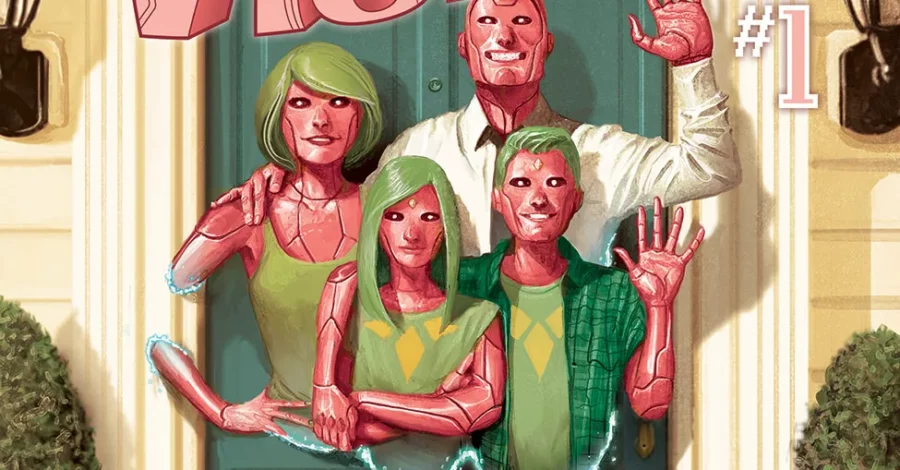
Review: Tom King’s Vision – A Masterpiece of Synthetic Horror Tom King doesn’t just write superhero stories; he writes existential crises. In The Vision, King and artist Gabriel Walta take a character known for being a stoic Avenger and turn him into the lead of a suburban nightmare. If you loved the reality-warping tension of WandaVision or are looking forward to the upcoming Vision Quest series, this comic is the essential blueprint This character was once obscure. Now, he is a household name thanks to the MCU and WandaVision. King’s series explores heavy topics across twelve complex issues. It asks what it truly means to be human. It also examines how we handle family trauma. The Vision Builds a Nuclear Family The premise of this story is simple yet chilling. Vision wants to understand humanity. He also wants to distance himself from his “father,” Ultron. To do this, Vision builds his own family. He creates a wife, Virginia, and two teenage children, Vin and Viv. They live in a house with a white picket fence in Virginia. Vision even takes a job as the Avengers liaison to the White House. He tries to live a normal, suburban life. Every night, the family sits at the dinner table. They do not eat food. Instead, they beam recorded experiences of their day to each other. This attempt at a “normal” life feels intentional and uncomfortable. It is a robotic approximation of human happiness. Trauma and the Catalyst for Chaos Very quickly, a dark event sends their lives spiraling out of control. Tom King uses this catalyst to explore the humanity of these artificial beings. He effectively portrays PTSD in life forms that barely understand feelings. The children begin to change. Vin develops obsessive traits and acts out passages of Shakespeare. Virginia begins repeating words and tells lies to protect her family. These quirks create a fantastic contrast to their robotic behavior. King’s greatest strength is his dialogue. He makes the family seem both cold and logical, yet deeply loving. You will find yourself rooting for the Visions even as they become horrifying. Defining Humanity Through Artificial Life Does a person need flesh and blood to be human? Does a soul require a biological heart? King does not provide easy answers. However, he shows that the Visions are one of the most human families in comics. Virginia lies to protect her children like any human mother. Viv develops a crush on a local boy. She replays the memory of their conversation over and over. She feels things she cannot fully name. The style echoes King’s later work on Mister Miracle. He places boring family life right next to life-or-death superhero drama. If you enjoyed that book, you will love this one. You will feel for this family, but you will also learn to fear them. The Visual Style of Gabriel Walta Gabriel Walta’s artwork is the perfect match for this drama. His panels are big, clear, and very colorful. He makes these robotic characters incredibly emotive. Their facial expressions and body language clearly show the high stakes of the story. The coloring by Jordie Bellaire is equally impressive. The hues are warm during everyday scenes. They switch to cold, desolate tones when the story turns morbid. This shift highlights the loneliness growing within the characters. Michael Walsh takes over the art for issue seven. While a change in artists can be jarring, it works here. This issue is a flashback to Vision’s time with Wanda. The sketchy, cartoon style fits the look of an earlier era. NEW AVENGERS BREAKOUT REVIEW Our Final Verdict on Tom King’s Vision This is a dense book with layers of meaning. You might need to read it twice to catch everything. The story is both sad and hopeful. It is also terrifying. You should definitely read this book. This is especially true if you are a fan of the MCU version. This Vision is more robotic and less empathetic than the movies. However, you will see exactly where the film inspiration started. We give this series full marks. It deserves a spot on every comic fan’s bookshelf. BGCP SUGGESTS: The Vision Collector’s Guide If our review has you ready to enter the suburbs of Arlington, Virginia, here are the best ways to experience this masterpiece and the stories that inspired it. 1. The Definitive Edition: Vision: The Complete Collection 👉 Buy Vision: The Complete Collection on Amazon Why it’s a must-own: This collects all 12 issues of the Eisner Award-winning run. It’s the perfect “one-and-done” graphic novel for your shelf. 2. For the Hardcore Collector: The Visions (Marvel Premier Collection) 👉 Pre-order The Visions Premier Edition on Amazon Why it’s a must-own: Releasing in June 2026, this high-end oversized format features bonus sketches and behind-the-scenes notes from Tom King and Gabriel Walta. 3. The Retro Inspiration: Vision & The Scarlet Witch – The Saga of Wanda and Vision 👉 Buy The Saga of Wanda and Vision on Amazon Why it’s a must-own: See the 1980s “suburban” roots that Tom King subverted. This collection features their wedding and the birth of Billy and Tommy. 4. The Spiritual Successor: Mister Miracle by Tom King 👉 Buy Mister Miracle Deluxe Edition on Amazon Why it’s a must-own: If you loved the trauma-focused writing in The Vision, King’s work on Mister Miracle is the perfect follow-up.
Tom King’s Vision Review: Best Marvel Comic of the Decade? Read More »
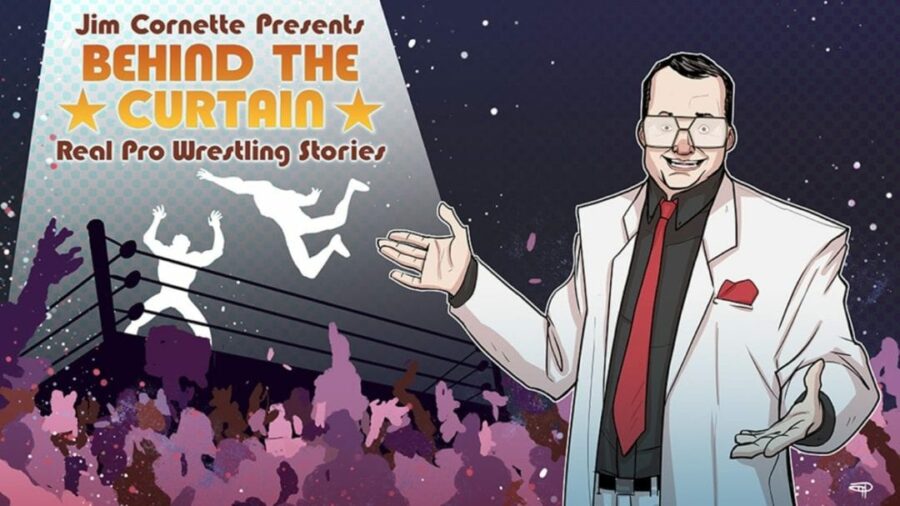
Jim Cornette Behind the Curtain Review: Wrestling’s Twilight Zone INTRODUCTION: The Docu-Comic of the Century Welcome to our Jim Cornette Behind the Curtain Review. This illustrated docu-comic explores the golden age of professional wrestling. Specifically, it focuses on the “veil of commitment” that kept the industry alive. Presented by Jim Cornette, the book feels like a wrestling version of The Twilight Zone. While it looks like a superhero comic, these stories are real. They feature high-risk stakes and high-intensity drama. Prepare to get slammed into the squared circle with this fascinating IDW release. STORY: Kayfabe and the Montreal Screwjob In this Jim Cornette Behind the Curtain Review, we dive into the mind of a notorious wrestling businessman. Cornette knows his history. He tours the reader through the backstories of wrestling’s greatest “works.” He even includes his own involvement in the infamous Montreal Screwjob. As a diehard fan, I found the telling of these stories 100% factually accurate. The book effectively slams the “wrestling is fake” belief to the mat. Cornette argues that wrestling is a circus of sport, theatre, and psychological manipulation. Because the internet has torn down the walls of kayfabe, this look at the “locker room law” of the past is essential reading. ART: Superhuman Proportions and Eerie Eyes Denis Medri’s artwork is a standout point of this Jim Cornette Behind the Curtain Review. Medri presents wrestlers with unrealistic proportions. For example, Ric Flair looks like a Goliath. However, this style beautifully represents how fans remember their childhood icons. The art cements human legends as superhuman superstars. That being said, the eyes are somewhat unsettling. Cornette narrates the action like Rod Serling, breaking the fourth wall as the history unfolds around him. VERDICT: The Final Jim Cornette Behind the Curtain Review Overall, Jim Cornette’s history of wrestling is fully engaging. You will love it whether you are a wrestling fan or not. I am gobsmacked that Hollywood hasn’t picked up these stories yet. They change the world of storytelling forever. Accuracy: 10/10 Art Style: 8/10 Verdict: A Main Event stunner. Check out more of our reviews: Watchmen Review: 5 Reasons It Is A Masterpiece Review – Swamp Thing: The Root of All Evil Ready to step behind the curtain? Buy Jim Cornette Presents on Amazon.
Jim Cornette Behind the Curtain Review: 7 Shocking Secrets Read More »
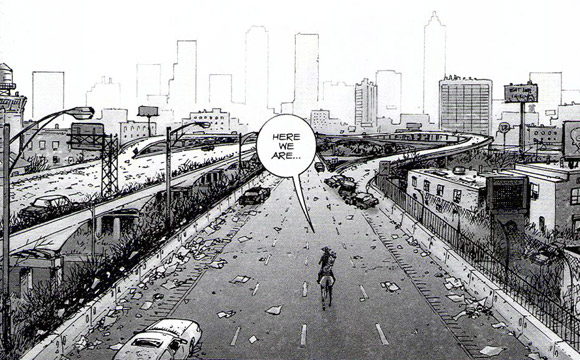
Review – The Walking Dead Volume 1: Days Gone Bye Publisher: Image Comics Writer: Robert Kirkman Penciller: Tony Moore Inker: Tony Moore Letterer: Robert Kirkman Release Date: October 2003 – March 2004 The Walking Dead comic recently came to an end, so getting to go back and review Days Gone Bye, – the first volume in the series, – was an opportune chance to revisit how this pop culture juggernaut came about. The Walking Dead tells the story of Rick Grimes; an Atlanta sheriff who gets flung headfirst into the zombie apocalypse, which throws an overwhelming amount of un-dead corpses his way and exposes the brutality required to survive this harsh new world. Where most other zombie media focuses on the actual zombies and monsters killing human characters, The Walking Dead instead chooses to focus on the human relationships within the group of survivors that we follow. Although this has become somewhat of a trope over recent years, reading The Walking Dead was the first time that I saw the concept of ‘fight the dead, fear the living,’ actually realised and at the time I thought that it was fantastically original and refreshing. Unfortunately, we have been somewhat bombarded with zombie media to the point of parody since this book’s debut and the market has become extremely saturated in the years since it released, but credit is still due to the story that started it all. This idea has been parroted many times since because it was an awesome idea to begin with. Beyond the initial innovative idea though, the writing has to be there to back it up. Robert Kirkman is brilliant at building his universe and really making his characters and settings feel fleshed out. This was also one of the first comic books I read, where I really felt the constantly present threat that the characters had to live with on a daily basis and it honestly does feel like no character is ever truly safe. Kirkman does somewhat lean on shock value to keep readers engaged in this book, which is not always something that I am a huge fan of. He also isn’t afraid to explore extremely dark themes and sadly doesn’t always do so with the most subtlety or grace, resulting in some tactless excess and some poorly handled choices. Tony Moore manages to capture a brilliant level of detail and expression in every frame of this volume. I also love the clarity of his artwork; there is never a point in this book where I felt confused as to what I was seeing. The version of the book I read for review had also been coloured, however when I originally read the book, it was in black and white. To be honest, I think I prefer the B&W approach as it fits the horror theme of the book better and doesn’t look as cartoonish. Admittedly, as much as I enjoyed Tony Moore’s work in this volume, Charlie Adlard took over art duties from volume 2 onwards and I much prefer his work. Adlard’s drawing style is wildly different to Moore’s and it does take some getting used to, but once you settle into it, it is great. Overall, I really enjoyed going back and reading Days Gone Bye for review. It is pretty amazing when you consider all of the other media that has spawned from this single comic. Some of the writing can be fairly clumsy at times and Moore’s art carries a certain cheesiness to it, but there was enough talent onboard here to bring this franchise to life and the rest is history at this point.
Review – The Walking Dead Volume 1: Days Gone Bye Read More »
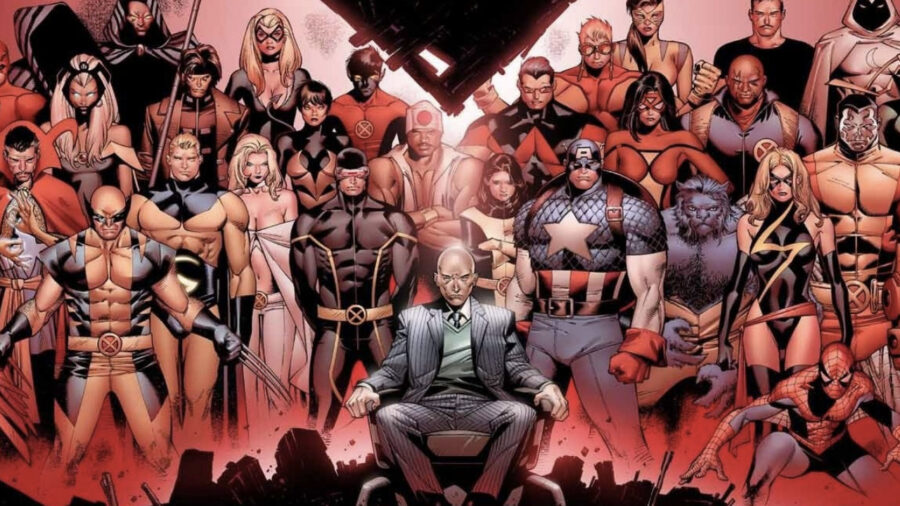
Review: House of M – A World Without Heroes? Publisher: Marvel Comics Writer: Brian Michael Bendis Artist: Olivier Coipel Release Date: June – November 2005 House of M asks a dangerous question. If you could have your heart’s desire, would you take it? Even if it meant living a lie? In this massive 2005 crossover, Brian Michael Bendis explores this existential dilemma. Following the chaos of Avengers: Disassembled, the Avengers and X-Men must decide the fate of the Scarlet Witch. Her breakdown threatens reality itself. But before they can act, the world changes. A Perfect World? The story drops us into an alternate reality. Mutants are the dominant species. Humans are the minority. Everyone has what they always wanted. Peter Parker is a celebrity married to Gwen Stacy. Wolverine is a high-ranking SHIELD agent. Magneto rules the world. Bendis handles this setup brilliantly. He uses the medium to make the reader question their own desires. Would you accept a fake paradise to escape real pain? This concept is fascinating. We see a world where Magneto has won. Yet, in the early panels, he shows striking regret. He repents for dragging his children into his war. This adds depth to a villain who is usually unwavering. Wanda’s Mental State The emotional core of this book is Wanda Maximoff. The slow build-up of her anguish is heartbreaking. She carries the baggage of losing her children and her husband, Vision. Bendis presents these ideas much better here than in Avengers: Disassembled. The execution is less heavy-handed. The narrative flows naturally toward the inevitable conclusion. We know where it is going, but that knowledge makes the journey more somber. The heroes work hard to fix reality, unaware that they are racing toward a tragedy. The Art of Reality Olivier Coipel’s art is a highlight. His pencils capture a phenomenal level of detail. In a story filled with grief, facial expressions matter. Coipel delivers. I also appreciated the costume design. In this alternate universe, the heroes wear different outfits. The attention to detail in these new designs is impressive. It makes the “House of M” world feel lived-in and distinct from the regular Marvel Universe (Earth-616). However, there is one small issue. The cover art often displays costumes that don’t match the interior panels. This is a common issue in comics, but it is distracting here. For a major event from a company like Marvel, you expect better consistency. Why It Matters This story changed everything. It ends with three simple words: “No More Mutants.” This single moment decimated the mutant population. It changed the dynamic of X-Men comics for nearly a decade. Revisiting it now, the stakes feel just as high. It is also fascinating to view this through the lens of the MCU. With WandaVision and Doctor Strange in the Multiverse of Madness, we see live-action adaptations tackling similar themes of grief and reality warping. Final Verdict I am glad I revisited House of M. It remains one of Brian Michael Bendis’ best works. The artwork complements the story perfectly. The themes of PTSD and trauma add weight to the superhero action. There is a reason fans remember this book so fondly. It is arguably one of Marvel’s best crossover events. If you want to understand the modern history of the X-Men, you must read this book. Score: 5/5 More Reviews from BGCP Review: Avengers Disassembled Review: Watchmen
Review: House of M (Marvel Comics) – The Day Mutants Died Read More »