Kat Dennings

Thor (2011) Review: Does the God of Thunder’s Origin Story Still Hold Up?

Thor (2011) – Does It Still Hold Up?

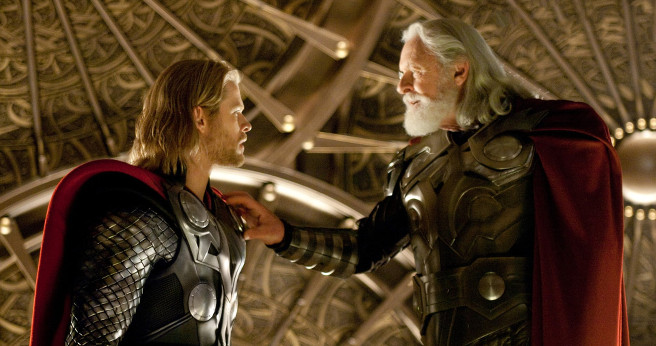
  Revisit the beginning of the Asgardian saga. We review Thor (2011), analyzing Kenneth Branagh’s Shakespearean direction, the debut of Tom Hiddleston’s Loki, and whether the Phase 1 classic stands the test of time. The Verdict at a Glance Introduction: The MCU’s First Big Gamble Before 2011, the Marvel Cinematic Universe was grounded in the tech-based reality of Iron Man. Thor was the franchise’s first leap of faith into high fantasy, magic, and cosmic gods. Directed by Kenneth Branagh, the film attempts to blend Shakespearean family drama with modern superhero tropes. Looking back more than a decade later, Thor feels distinct from the rest of the MCU. It lacks the improv-heavy comedy of Ragnarok, opting instead for a sincere, theatrical tone. But is it a classic, or just a stepping stone? The Plot: A Tale of Two Realms Thor (Chris Hemsworth), the arrogant but powerful prince of Asgard, reignites an ancient war with the Frost Giants. As punishment, his father Odin (Anthony Hopkins) strips him of his powers and banishes him to Earth—specifically, a small town in New Mexico. While Thor learns humility among humans (and falls for astrophysicist Jane Foster), his brother Loki (Tom Hiddleston) uncovers his own dark origins and plots to seize the throne of Asgard. What Works (The Worthy) The Perfect Casting It is impossible to imagine anyone else in these roles. Chris Hemsworth nails the transition from arrogant warmonger to humble hero, bringing a physicality that sells the character immediately. However, the real star is Tom Hiddleston. His nuanced performance as Loki provides the MCU with its first genuinely tragic villain, setting the stage for his dominance in The Avengers. The Shakespearean Drama Kenneth Branagh brings a level of gravitas to the Asgard scenes that elevates the material. The conflict isn’t just about punching bad guys; it’s about fathers, sons, and the burden of legacy. The dialogue in the throne room feels weighty and significant, giving the film a unique flavor compared to the quip-heavy scripts of later Marvel movies. Fish-Out-of-Water Humor The film is at its best when Thor is struggling with earthly customs. The famous “Another!” scene, where he smashes a coffee mug in a diner, remains one of the most charming moments in Phase 1. What Doesn’t Work (The Unworthy) The “Small Town” Problem For a movie about space gods, a surprising amount of the runtime is spent in a dusty parking lot in New Mexico. The budget constraints of Phase 1 are visible here. The Destroyer armor battle in the climax feels less like a planetary threat and more like a small skirmish in a cul-de-sac. The Romance While Hemsworth and Portman are both talented, their romance feels rushed. They fall in love over the course of a long weekend, largely based on Thor being attractive and polite. It lacks the spark that Tony Stark and Pepper Potts had. Overuse of Dutch Angles A common critique of the film is the cinematography. Branagh loves a “Dutch angle” (tilting the camera to the side). Once you notice that almost every shot in the movie is tilted, it becomes distracting. Final Thoughts: A Solid Foundation Thor (2011) is a charming, if slightly uneven, entry in the Marvel canon. It did the heavy lifting of introducing magic to the MCU, paving the way for Doctor Strange and Guardians of the Galaxy. While it may feel small compared to the cosmic epics that followed, the emotional core of the Thor/Loki relationship makes it essential viewing. Pros: Hiddleston’s debut; Asgardian production design; Sincere emotional stakes. Cons: The bleached eyebrows on Thor; Forgettable action set pieces on Earth; Forced Hawkeye cameo. Where to Buy & Watch To witness the start of the Odinson’s journey, check out the links below [Stream on Amazon Prime Video] [Buy Thor (2011) 4K Ultra HD + Blu-ray on Amazon] [Buy Thor (2011) Standard DVD on Amazon]

Thor (2011) – Does It Still Hold Up? Read More »

Is Thor: The Dark World the MCU’s Lowest Point? A Retrospective Review

Thor: The Dark World Review – MCU’s Worst Movie?

Is Thor: The Dark World worth watching in your MCU marathon? We review the flawed sequel, analyzing its forgettable villain, tonal issues, and why it is often ranked as the worst Marvel movie. The Verdict at a Glance Introduction: The MCU’s Identity Crisis In the grand tapestry of the Marvel Cinematic Universe (MCU), Thor: The Dark World (2013) occupies a difficult spot. Sandwiched between the Shakespearean drama of the first Thor and the psychedelic comedy of Thor: Ragnarok, this sequel struggles to find its footing. While it was a financial success, critical and fan reception has soured over the years. Is it simply a skippable chapter, or is it a fundamental misstep in Marvel history? This review breaks down why the God of Thunder’s second solo outing is widely considered the franchise’s “black sheep.” The Plot: A Generic Fantasy Slog The story picks up post-Avengers, with Thor (Chris Hemsworth) bringing order to the Nine Realms. However, an ancient enemy returns: Malekith (Christopher Eccleston) and his Dark Elves, who seek a weapon known as the Aether (the Reality Stone) to plunge the universe into eternal darkness. When Jane Foster (Natalie Portman) accidentally absorbs the Aether, she becomes a target, forcing Thor to bring her to Asgard and eventually team up with his treacherous brother, Loki (Tom Hiddleston). Where It Went Wrong Malekith: The “Who?” of Marvel Villains The film’s fatal flaw is its antagonist. Christopher Eccleston is a fantastic actor, yet he is buried under prosthetics and given zero character depth. Malekith has no relatable motivation—he simply wants to destroy the universe because he likes the dark. In an era of complex villains like Thanos or Killmonger, Malekith is shockingly one-dimensional and entirely forgettable. A Tonal Mess The Dark World tries too hard to be “Game of Thrones” in space. It abandons the fish-out-of-water charm of the first movie but lacks the bold, colorful humor that Taika Waititi would later bring to the franchise. The result is a movie that feels gray, dreary, and overly serious without the emotional weight to back it up. The Wasted Talents of Natalie Portman Jane Foster is reduced to a plot device. Rather than an active participant, she spends the majority of the film as a living vessel for the MacGuffin (The Aether), fainting or being carried from room to room. It is no surprise that Portman took a long hiatus from the MCU after this entry; the script gave her nothing to do. Boring Exposition Much of the dialogue consists of characters explaining fantasy pseudoscience to one another. The pacing drags significantly in the second act, making the 1 hour and 52-minute runtime feel much longer. The Saving Graces It isn’t all bad. Here is what keeps the movie watchable: Final Thoughts: Essential Viewing Only for Completionists Thor: The Dark World is a film that checks boxes rather than telling a compelling story. It introduces an Infinity Stone (The Aether), but fails to make us care about the journey. If you are doing a full MCU rewatch, you might feel obligated to sit through it. However, if you are looking for entertainment value, this is easily the most skippable entry in the Infinity Saga. It is a harsh reminder that even Marvel Studios isn’t invincible. Pros: Tom Hiddleston’s Loki; High production value; Important for Avengers: Endgame context. Cons: Forgettable villain; Dull color palette; Weak script; Wasted supporting cast. Where to Buy & Watch If you need to complete your collection or want to see the introduction of the Reality Stone, you can purchase the film below.

Thor: The Dark World Review – MCU’s Worst Movie? Read More »

Scroll to Top